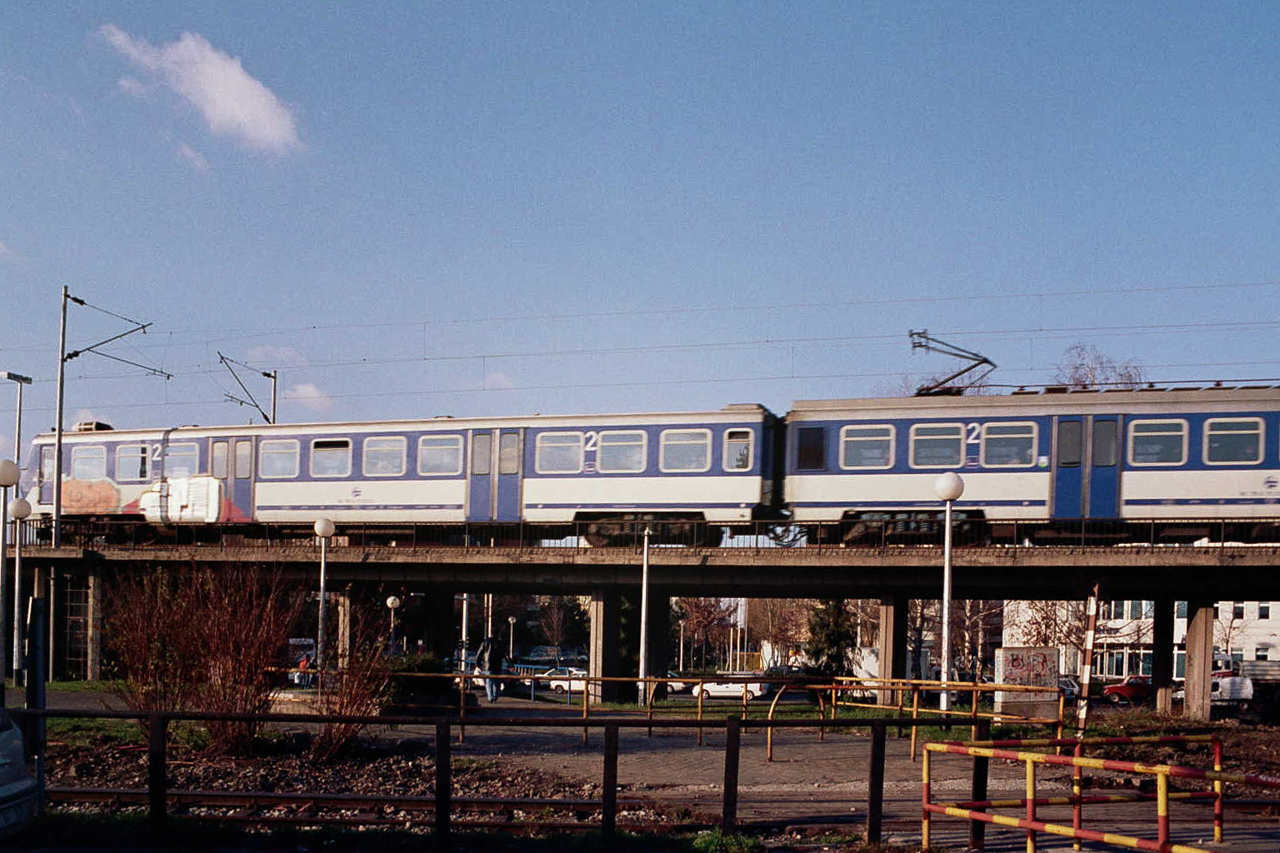
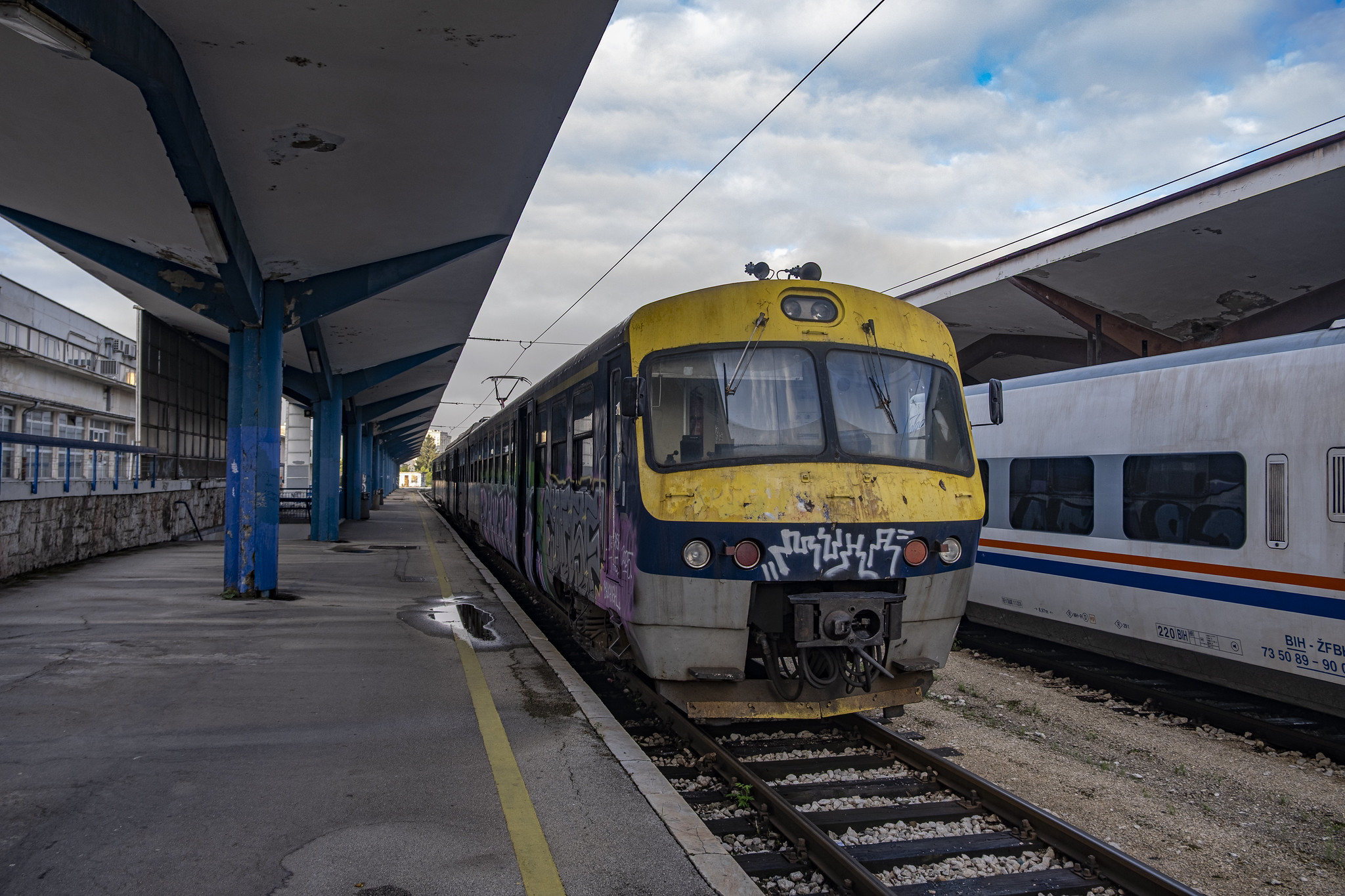
Of the many train types I’ve travelled on over the years, one of my favorites is the Ganz-MÁVAG 441/6111 series EMU, the Yugoslav Railways (JŽ) train built in Hungary in the late 1970s and the early 1980s. While a meter gauge subvariant was also produced for the Sahel Metro in Tunisia, very few of those were made and they were all retired by 2010. The JŽ type(s) on the other hand have had a colorful history, mainly in Croatia (with HŽPP) and Bosnia and Herzegovina (with ŽFBH) where they were initially made famous running the Winter Olympics branded “Olimpik ekspres” service. Their story in Croatia is finally coming to an end, but some Croatian units will serve for a few more years in BiH – in late March I got to witness the first 3 of those ŽFBH bound units cross the Sava into BiH, prompting this post.
Per an English language Ganz-MÁVAG promotional leaflet from the early 1980s, the JŽ 441 series EMUs were delivered to JŽ starting in 1976 and they were produced in two types: the 411-0 commuter series, and the 411-100 long distance series. The leaflet cites 34 commuter and 12 long distance trains delivered. Per information available, the total number of long distance trainsets was actually 16. 4 additional, first class only long distance trains were delivered ahead of the Olympics, for a total of 50 411 series trains.
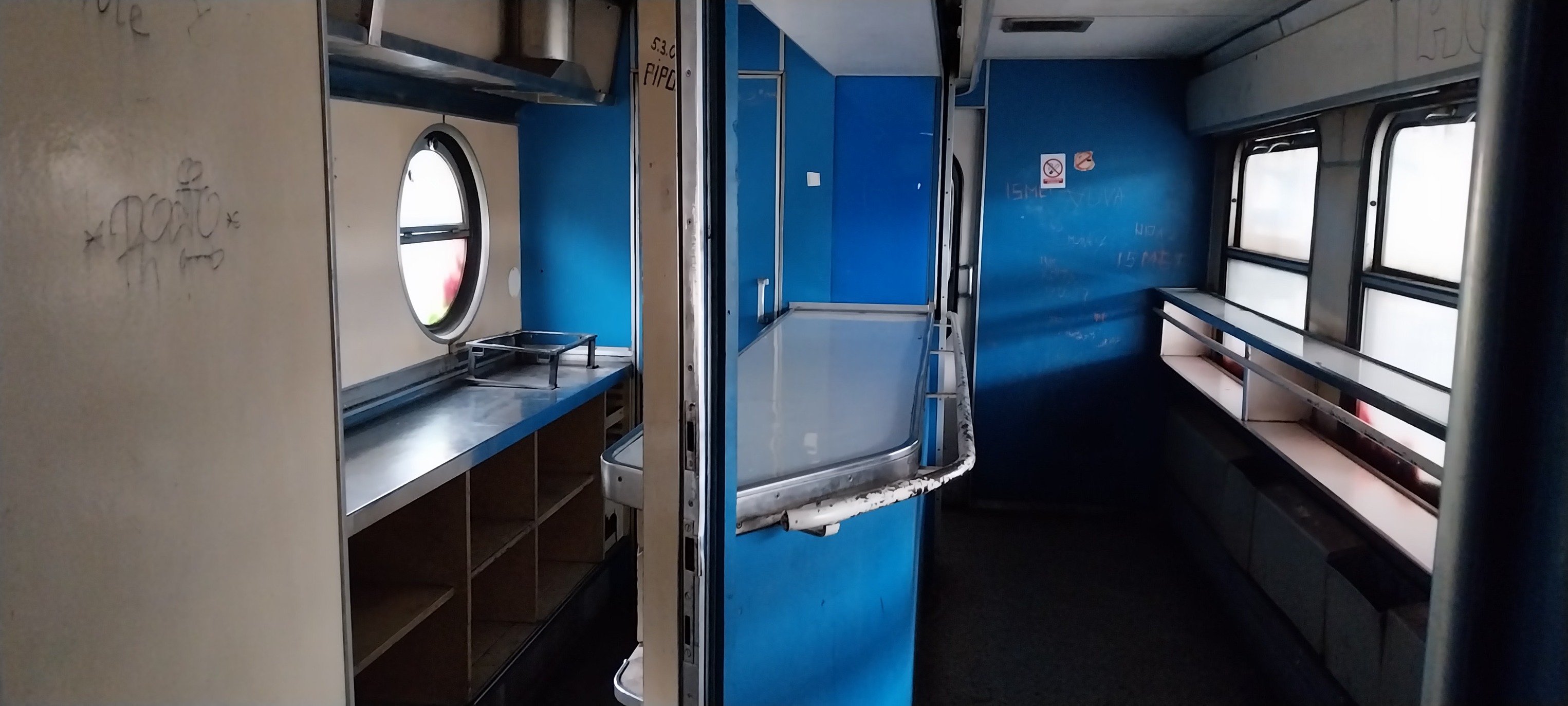
The long distance units can be easily identified by their three round windows on the left side of one of the driver’s cabs, where the train bar was located. The units were delivered to ŽTO Zagreb (24 commuter trains) and ŽTP Sarajevo (10 commuters and 16 long distance trains) branches of JŽ. The type was soon nicknamed “Mađar” (the Hungarian) or “Olimpik” (after the luxury long distance service). The 25 kV 50 Hz three-car electric trainset consists of two trailers with driver’s cab and a motor car in the middle. These trains were deployed on the recently electrified Yugoslav main lines – in some instances, passengers went straight from riding on steam trains to these futuristic electric trainsets!
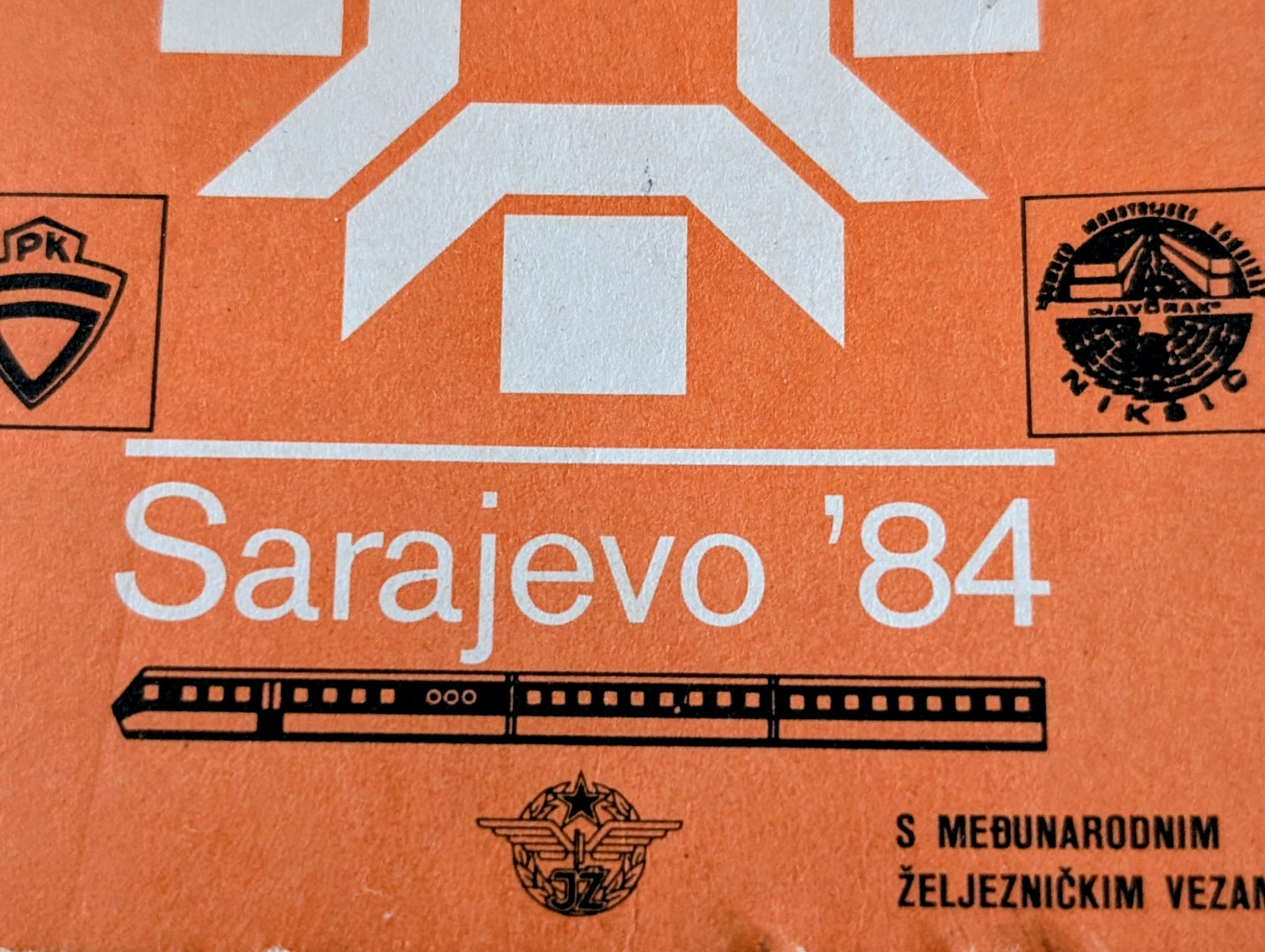
ŽTO Zagreb and ŽTP Sarajevo used their MÁVAGs differently. The Croatian electrified lines were split between 3kV DC (also used in Slovenia) and 25kV AC lines (used in other Yugoslav republics), so their MÁVAGs were limited to (mostly) the eastbound lines and (what would eventually become) Zagreb commuter services. While their 411-0 commuter version featured comfortable 2+2 seating (still present in one of the surviving units, 6111-010, that was just transferred from HŽPP to ŽFBH!), they were not designed for long distance services. ŽTO Zagreb would send them on longer routes as far as Vinkovci, but they eventually became a staple of the Zagreb suburban network. They would often meet their 3kV DC counterparts, ŽTO Ljubljana operated 311/315 series EMUs, at Dobova station. ŽTP Sarajevo on the other hand sent their 411-100 long distance MÁVAGs well outside its branch territory. Ahead of the 1984 Winter Olympics in Sarajevo they were deployed on the Ploče – Sarajevo – Belgrade service (and later Sarajevo – Zagreb) called the “Olimpik ekspres”. The name stuck well after this express line was long gone, and the remaining MÁVAGs in BiH are still often called the “Olimpiks”.
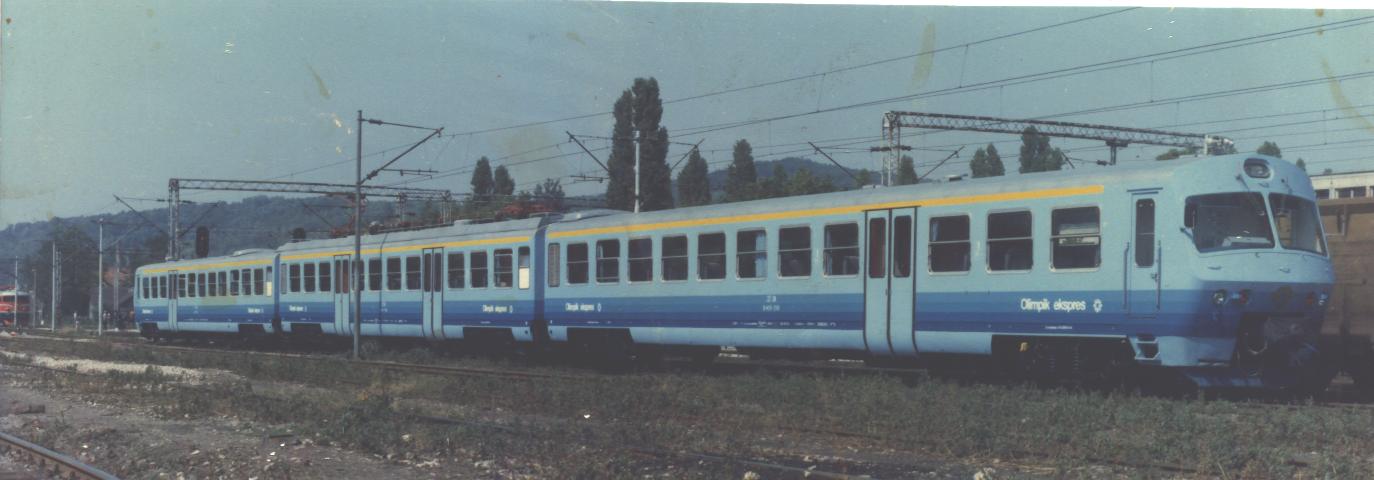
411-100 series on the Olimpik ekspres service provided a completely new level of comfort on Yugoslav railways and were beloved by passengers. Even though the Olimpik ekspres service was served by other rolling stock as well, the 4 all first class 411-100 units featured TVs, music, concierge service and free drinks. This level of service didn’t last very long, and reportedly the Olimpiks were degraded to a more regular express train service by the time of Yugoslav dissolution and war, but the legend still remains.
Like most Yugoslav stories, this one too eventually falls apart during disintegration. The 24 commuters operated by ŽTO Zagreb were transferred to the newly established Hrvatske Željeznice (HŽ) and renumbered in April 1992. The 441 series became the 6111 series (HŽ renumbered all of their former JŽ rolling stock), and the 24 trains were sequentially renumbered 6111-01…024. 3 ŽTP Sarajevo MÁVAGs also ended up with HŽ for a time. 2 411-100 long distance trains were reportedly located at Gredelj railworks in Zagreb at the start of the Bosnian war and temporarily ran for HŽ as 6111-101 and 611-102 in the 1990s. They then sat in Gredelj’s Vukomerec yard for years before finally being scrapped in 2022. A single ŽTP Sarajevo commuter ended up with HŽ as well, under more suspicious circumstances. It was reportedly transported by ship from Ploče to Rijeka at the start of the war. It also temporarily ran for HŽ as 6111-25 before it was scrapped in 2022. It’s unclear how and if HŽ(PP) and ŽFBH (the presumed owner of these trains) settled this matter.
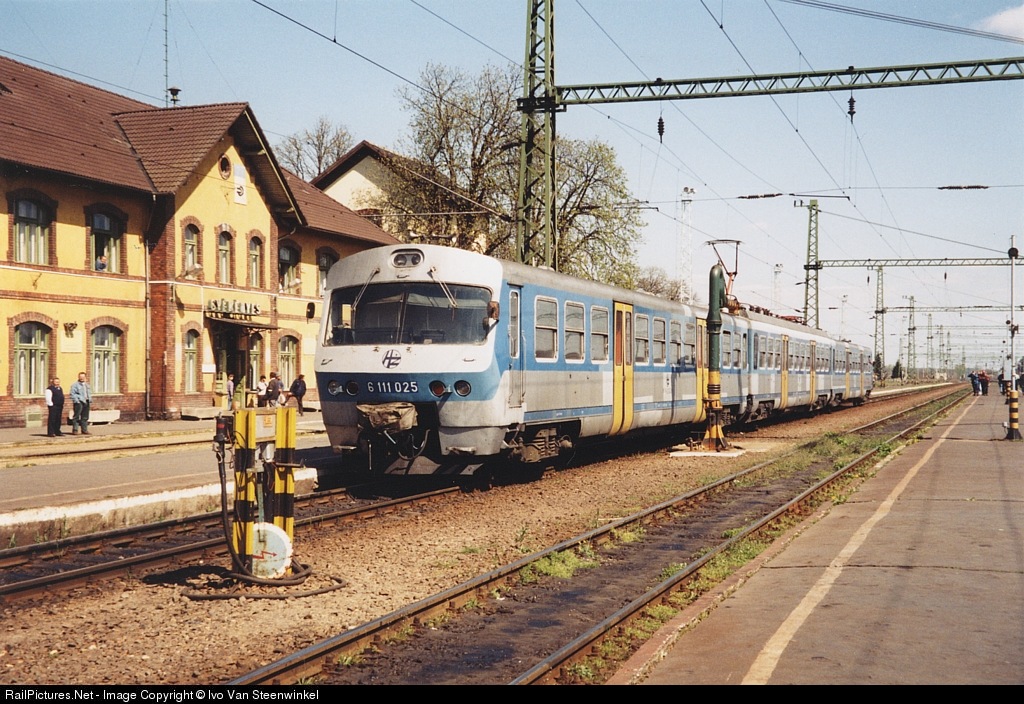
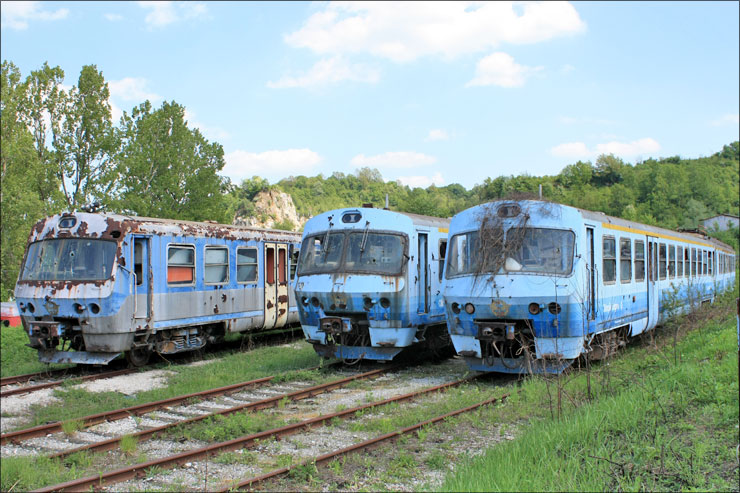
The last train left Sarajevo station on May 2nd 1992. Afterwards, all rail traffic was suspended due to the siege of the city by the Army of Republika Srpska. Following the war, the remaining ŽTP Sarajevo rolling stock was split between Željeznice Republike Srpske (ŽRS) and Željeznice Federacije Bosne i Hercegovine (ŽFBH), depending on where the vehicles were located. Of the 26 MÁVAGs originally operated by ŽTP Sarajevo, most units remained in ŽFBH territory, while those left in ŽRS territory reportedly never ran again after the war, rotting on a siding in Doboj. Per Google Maps photos, a few units are still there as of 2025 and at least one unit was destroyed in a fire recently. It’s unclear how many of the 26 units were destroyed in the war and how many were reactivated (we know that 3 aforementioned units ended up with HŽ before being scrapped). In 2026, 4 of the original 26 ŽTP Sarajevo 411s are presumed to be somewhat operational – two commuters (411-105 and 411-106) and two long distance trains (411-114 and 411-116). They are all used for local services, mostly on the Sarajevo to Pazarić and Sarajevo to Visoko lines. The destruction of railways in the Bosnian War and the effects of the post-war inter country split on rail operations require more research, but for now the “Olimpik” still serves in Sarajevo!
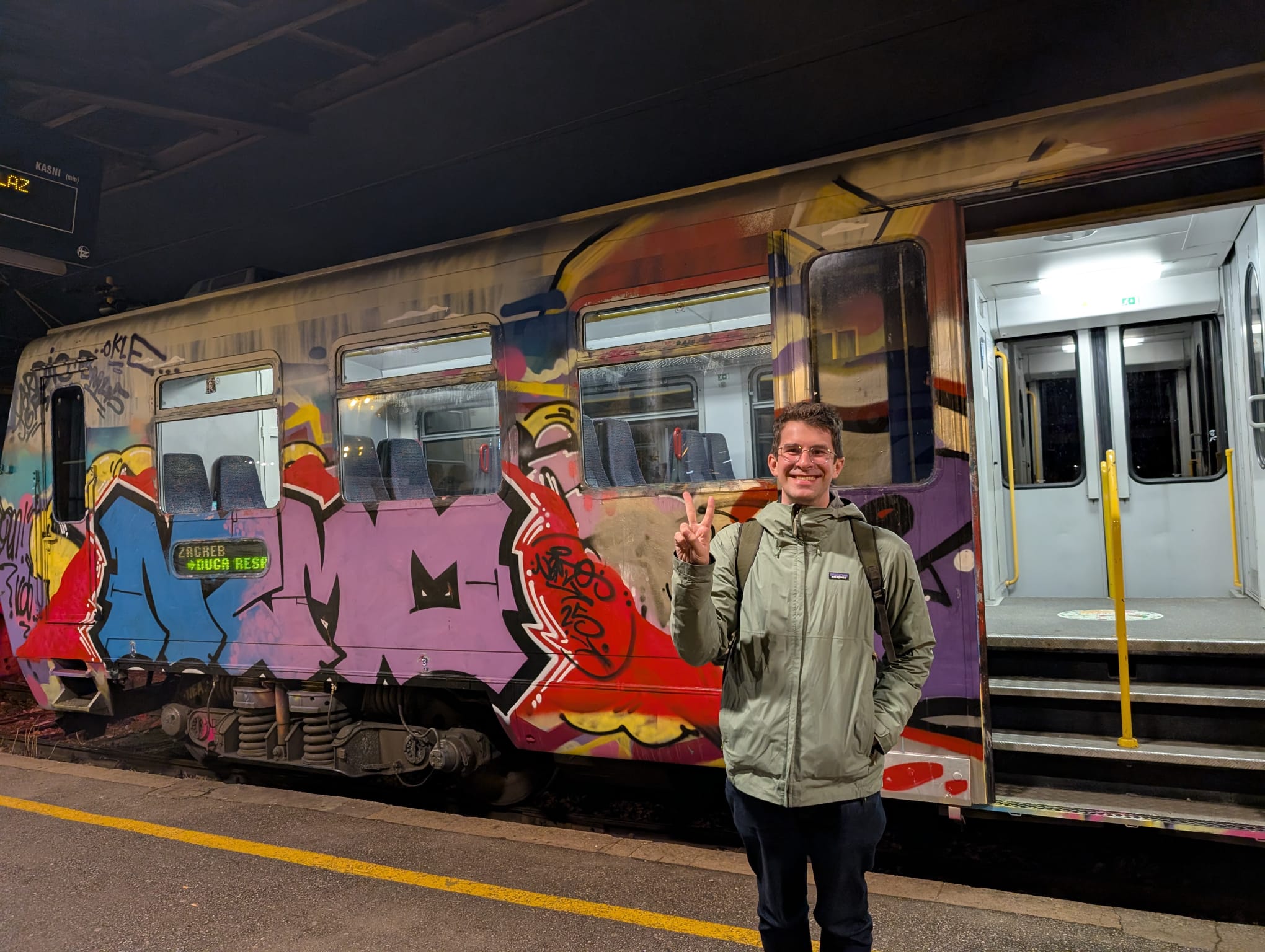
In the 1990s and the 2000s, the MÁVAGs were ubiquitous on the Zagreb suburban lines and a favorite for both local and international graffiti groups. No 6111 series was safe, angering many a local rail fan. But the type was celebrated locally and appears often on t-shirts, murals etc. This local subcultural context also requires more research. Gredelj and Končar made major modifications to the 6111, significantly changing it from the original 411-0 standard. By 2012 all Croatian electrified lines were on the 25kV AC standard, and Končar started delivering the first 6112 EMUs to HŽPP. With the introduction of new EMUs, the grimy 6111 was redirected to regional lines outside of Zagreb, often on the Zagreb – Ogulin or even the Zagreb – Rijeka line. Eventually, the once ubiquitous trains disappeared almost completely. In 2026 they mostly appear very early in the morning or late at night, serving only a handful services on workdays.
This finally brings us to the recent transfer of 3 units from HŽPP to ŽFBH in March 2026. In late 2025, 9 units were still active with HŽPP and rumors started to spread that 3 of those will soon depart for BiH. Such rumors have flared up from time to time in years prior, so it was unclear whether anything was going to come out of it this time. Prompted by claims online that they had already departed for BiH on March 23rd, I went to see them at the TSŽV maintenance yard in Zagreb.
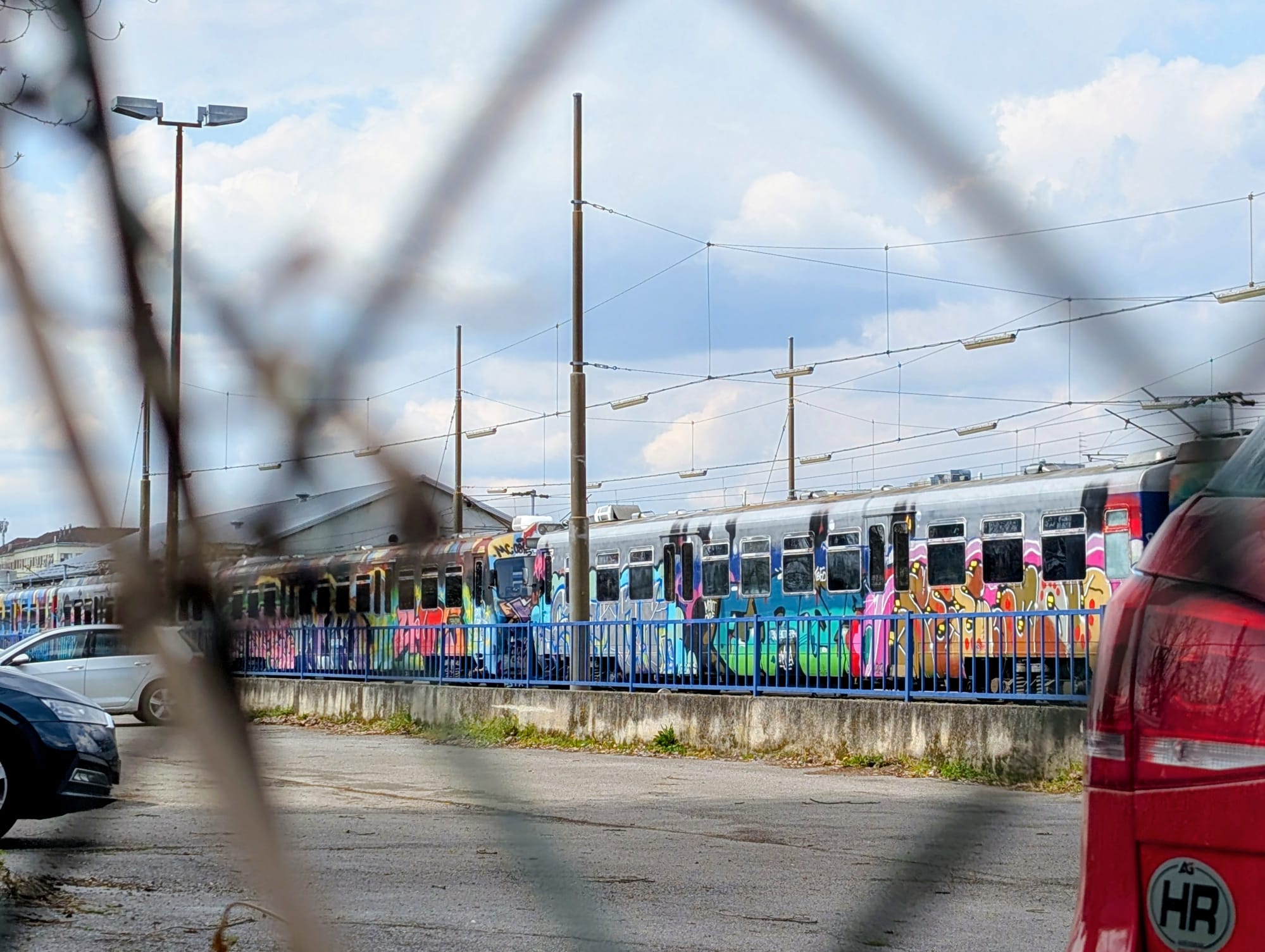
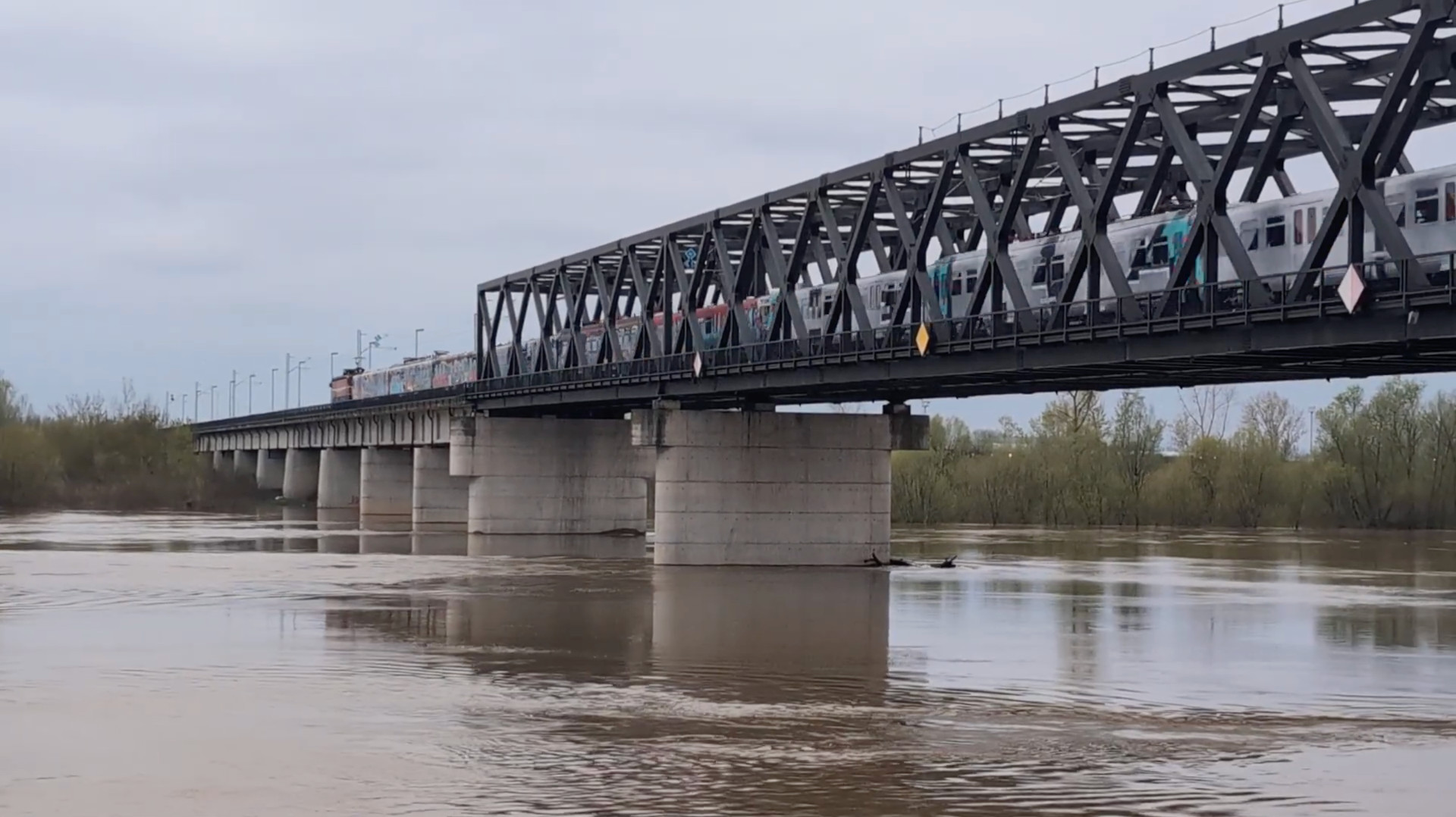
The 3 units (6111 009, 010 and 024) were staged together, seemingly ready to leave. They did indeed depart a few days later, but not after the last bit of trouble. HŽPP first attempted to move them coupled together on March 27, the day of an extreme, high wind storm. The move was scrapped following an incident with a coupler, which may have been related to the extreme weather (a few other HŽPP trains were damaged that day). The 3 trains were eventually hauled, one by one, to Strizivojna-Vrpolje by another MÁVAG (6111 004), before they were coupled together for transfer to BiH at Slavonski Šamac.
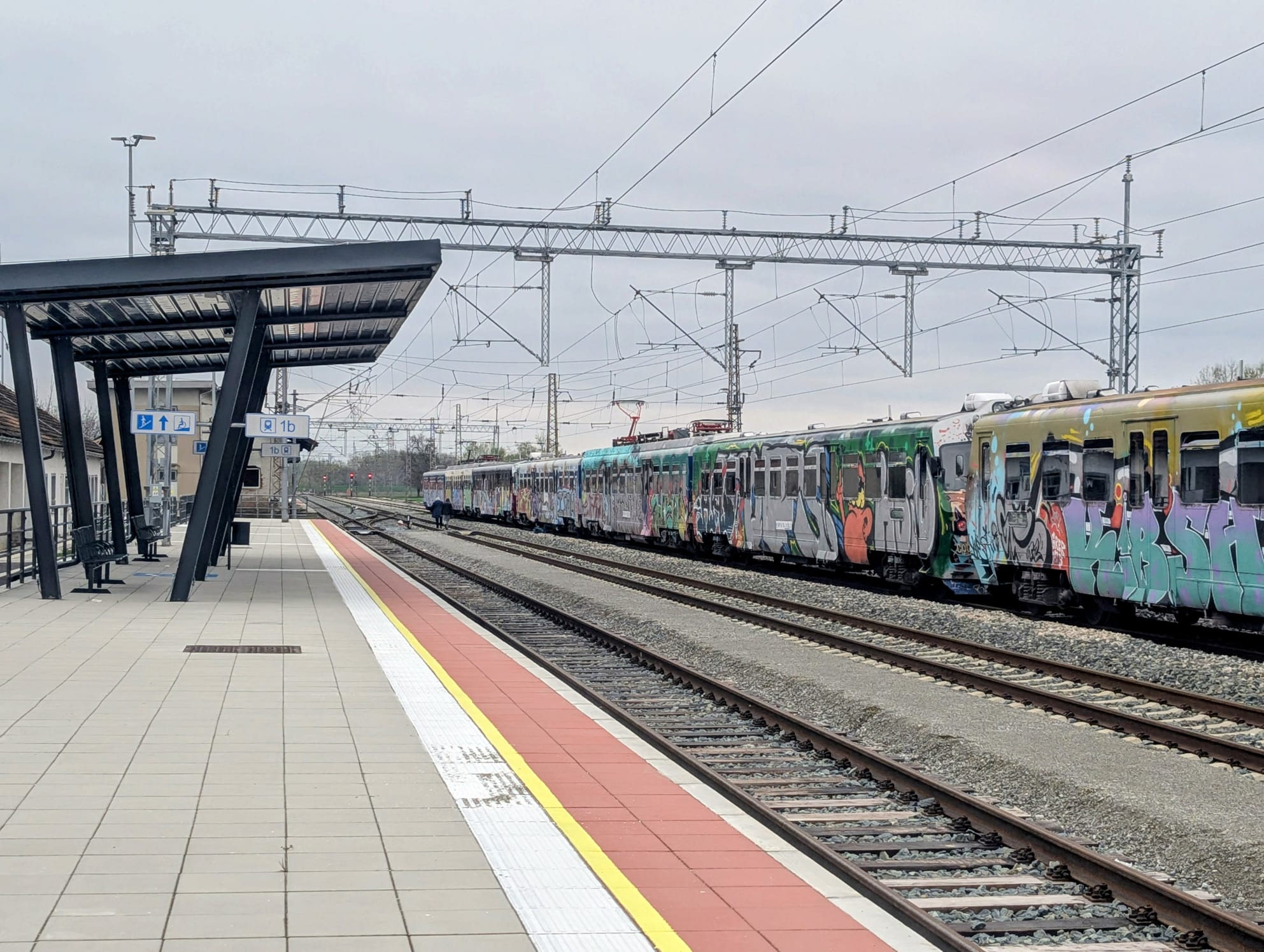
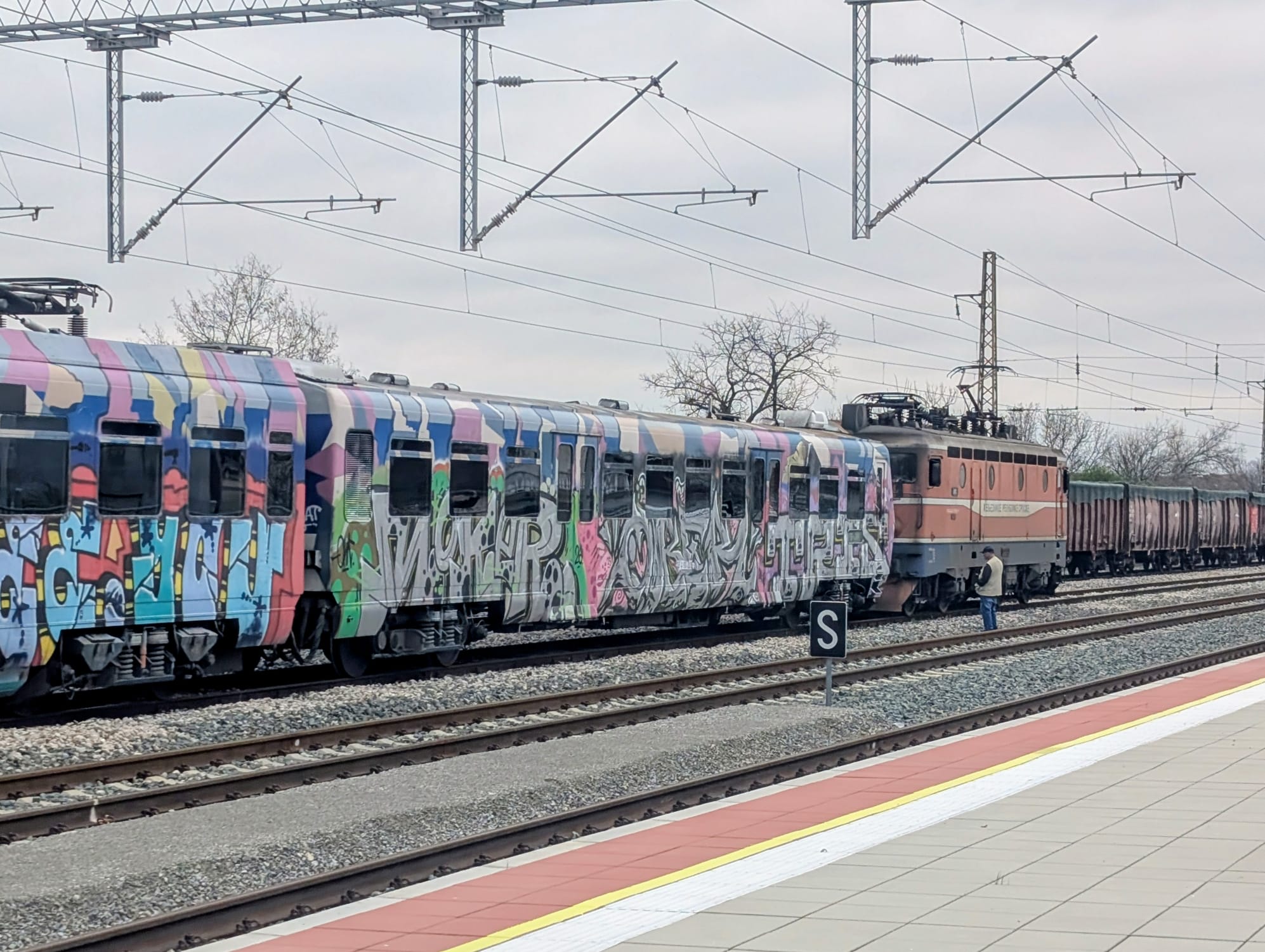
After being stuck inside for days due to the extreme wind storm, I decided to drive to Slavonski Šamac and try to catch them as they crossed the Sava into BiH. We got a car share and got to the Slavonski Šamac station just in time to see them go. There were a handful of staff milling around and luckily they didn’t mind us hanging out and taking pictures. We even got to watch them couple the three trainsets to a ŽRS 441 series locomotive. Even though the trains are going to Sarajevo where they will serve with ŽFBH, the railroad to Doboj is in ŽRS teritory, hence the use of their locomotive.
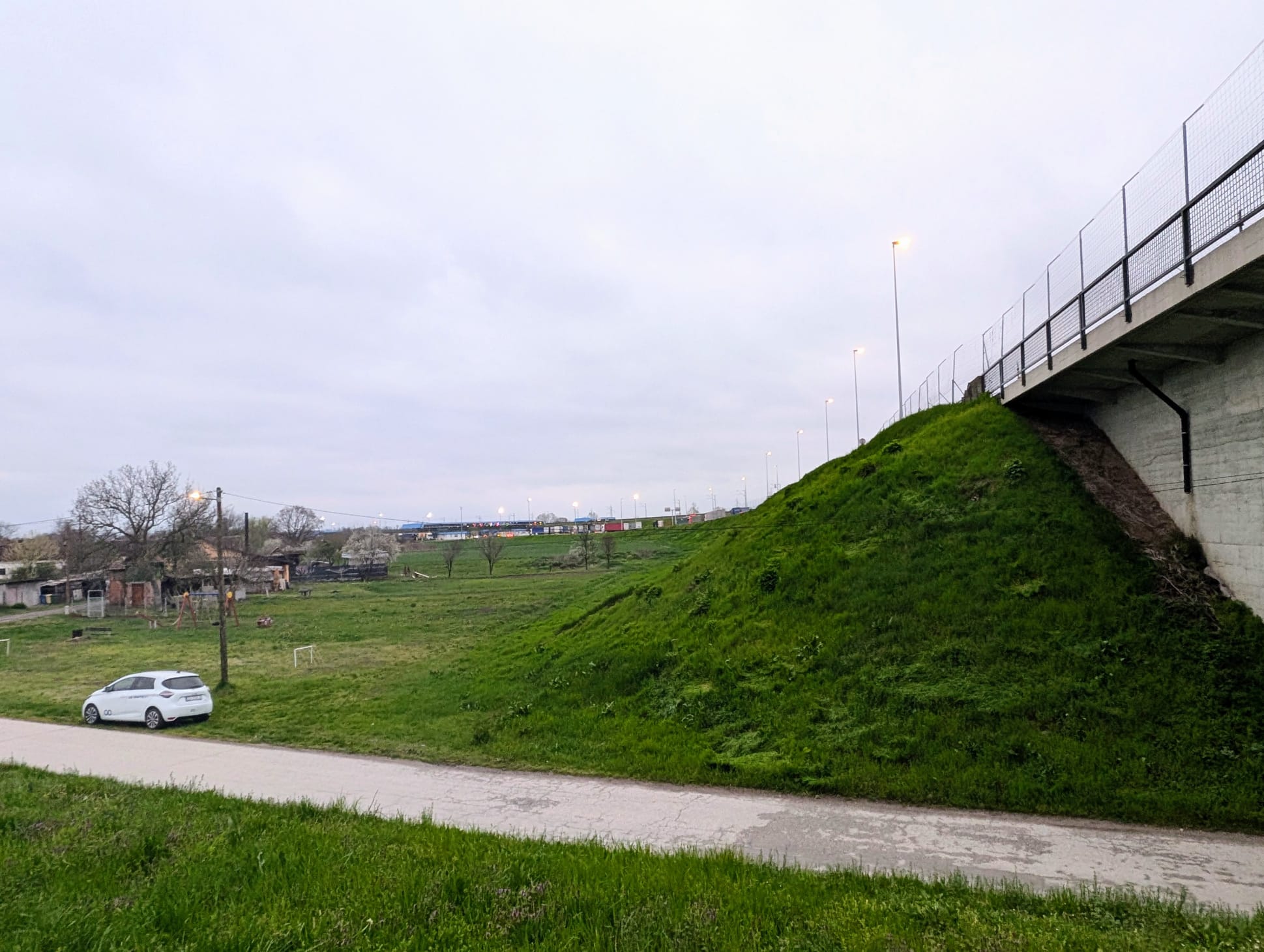
A HŽPP 7122 series DMU (former SJ Y1) on Osijek – Slavonski Šamac service dropped some passengers off and there was some freight traffic moving through the station. Even though no cross border passenger services run through Slavonski Šamac anymore, there does seem to be some freight going across. We then drove to the border, a combined rail and road bridge over the Sava river. I walked onto the embankment, looking for the right place to take pictures and shoot video. I didn’t know when the train was actually going to depart, but after 20 minutes I heard the old school horn of the 441 series locomotive! It was great to see the three coupled trainsets finally cross the river.
Over the years I travelled on the HŽPP MÁVAGs only seldomly. But they were a common sight and their graffitied, (sometimes) blue livery was a Zagreb icon. Now that they’re nearing retirement, I’m trying to see them and ride them before they are fully decommissioned. With most units already scrapped, I’m thrilled to see these 3 units go to ŽFBH instead of the scrapyard. While it would be wonderful if the 6111-010 train, the closest thing we have to the original 411-0 standard, could be preserved in a museum, that future is unlikely. Not only has it already been transferred to ŽFBH, the Croatian Railway Museum (HŽM) has been closed to the public for years and seems to have no ambition to preserve recent HŽ rolling stock. Rail preservation in Croatia is a topic for yet another time, but the successful collaboration between ZET (Zagreb public transit) and the Nikola Tesla Technical Museum points to possible good practice in preserving rail vehicles.
There has been no public confirmation from either side that this transfer actually took place, so we don’t know how this deal was actually structured and whether more HŽPP MÁVAGs will go to ŽFBH. There are of course rumors – 6 active MÁVAGs remain with HŽPP and some of them may join these 3 units in BiH soon. It would be great to give them another lease on life with ŽFBH – not only for those of us that love these trains, but also for the passengers in BiH, who have suffered greatly from service cuts due to limited rolling stock. In the meantime, I’ll take every opportunity to ride the HŽPP MÁVAGs while I still can, and I will definitely ride both the original 441s and the 6111 newcomers on ŽFBH!