I’ve been writing a lot about railroads in Bosnia and Herzegovina (BiH) lately. Despite abysmal rail passenger numbers (0.1% rail travels per capita in 2024 per Eurostat), I’ve been fascinated by the unique scenery of Bosnia’s railways and the fascinating history of its narrow gauge legacy (Bosnabahn). Perhaps more so than in any other European country, the history of railroad building in BiH is one of colonialism – railroads were quite literally the means of colonization by Austria-Hungary after the 1878 Berlin congress. The exclusively narrow gauge lines remained primarily a means for mineral extraction until after First World War. On the other hand, the rapid reconstruction of narrow gauge lines into standard gauge after World War 2, largely facilitated through youth work actions, is a fascinating example of reclamation and repurposing of that colonial legacy. But more than these older histories, I keep going back to Bosnia to understand the impact of two most recent calamities to hit Bosnian railroads – the Bosnian War and the current, divided political governance system based on the 1995 Dayton Peace Agreement.
The topic fascinates me because the public sphere is full of disinformation regarding reasons why rail travel in Bosnia and Herzegovina is so difficult in 2026. News articles will claim that Sarajevo and Zagreb were never reconnected by train after the war. This is not true – first trains started running in 2001, until they were cancelled in late 2016. I took this train myself a handful of times. Others will claim that trains don’t run in Bosnia because the railroads are still destroyed 30 years after the war. This is also plainly false – virtually all of BiH’s main lines were restored relatively quickly, and with lots of international support. On the other hand, the Una railroad, the one line with little to no chance of running across its full length ever again, pops up in the news every few years with claims about its “imminent” revitalization.
Over the last few weeks, I’ve made a couple of trips to the Una railroad to try to learn more about its history and current state of repair. I was also incredibly lucky to actually catch the first semi-scheduled train to run on a portion of the line for the first time in 5 years! On June 6th I took the Bihać – Bosanska Krupa weekend line, run by ŽFBH with funding from the Unsko-sanski canton. In this post I’ll cover some essential facts and history of the Una line, and offer some thoughts about its potential future.
The backround
The Una railroad is quite unique on what used to be the Yugoslav Railways network, because it was neither an old Austria-Hungary line, nor a post World War 2 project. Instead, the railroad’s construction started in 1936, at the very zenith of the interwar Kingdom of Yugoslavia. The goal of this 178km long railroad was to provide a connection between Bosnia and the Dalmatian ports (Zadar, Šibenik, Split), as well as a shorter route from Zagreb to Split. The railroad splits from the Sunja – Dobrljin – Novi Grad (Bosanski Novi) – Banja Luka line at Novi Grad (Bosanski Novi) and it follows the Una river almost all the way down to Knin. The originally unelectrified, single track standard gauge line wasn’t fully completed before the outbreak of World War 2, so trains only started running in 1948. The line soon overtook the Lika railroad as the main gateway to the Dalmation coast, as it was shorter in distance and significantly less mountainous.
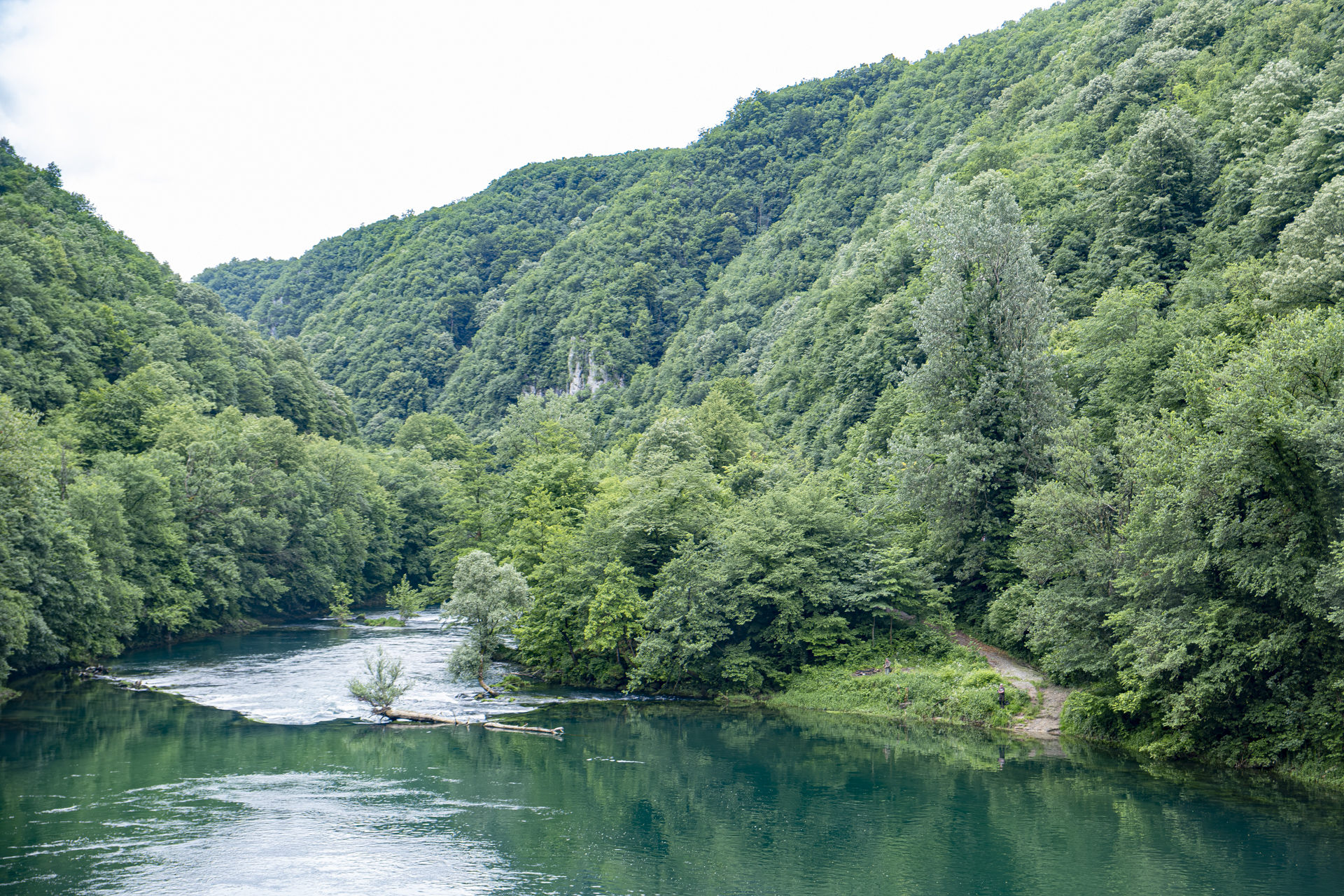
Thanks to the unique scenery of the beautiful, emerald green Una river, the line developed an almost mythical reputation. It saw up to 70 trains daily – in addition to trains from all over Yugoslavia, long distance trains from as far away as Stuttgart passed here. The railroad was also the only good connection between local towns and villages along the Una, many of which only had bad, gravel roads until very recently. As such, it still holds great significance for all who traveled on it, both locals and visitors alike. The railroad was upgraded with a new signaling system and fully electrified by 1987. Unfortunately, this did not last long.
Like virtually all rail infrastructure in Bosnia and Herzegovina, the Una railroad was significantly damaged in the Bosnian War (1992-1995), with bridges across the river destroyed. But contrary to popular belief, it was repaired relatively quickly. Reportedly, the majority of repair work was performed or funded by SFOR (Stabilisation Force, the NATO led peacekeeping mission in BiH) and the railroad was ceremoniously reopened in 1998. However, operations on the railroad, which now crisscrosses the international border between Bosnia and Herzegovina and Croatia 9 times, were difficult.
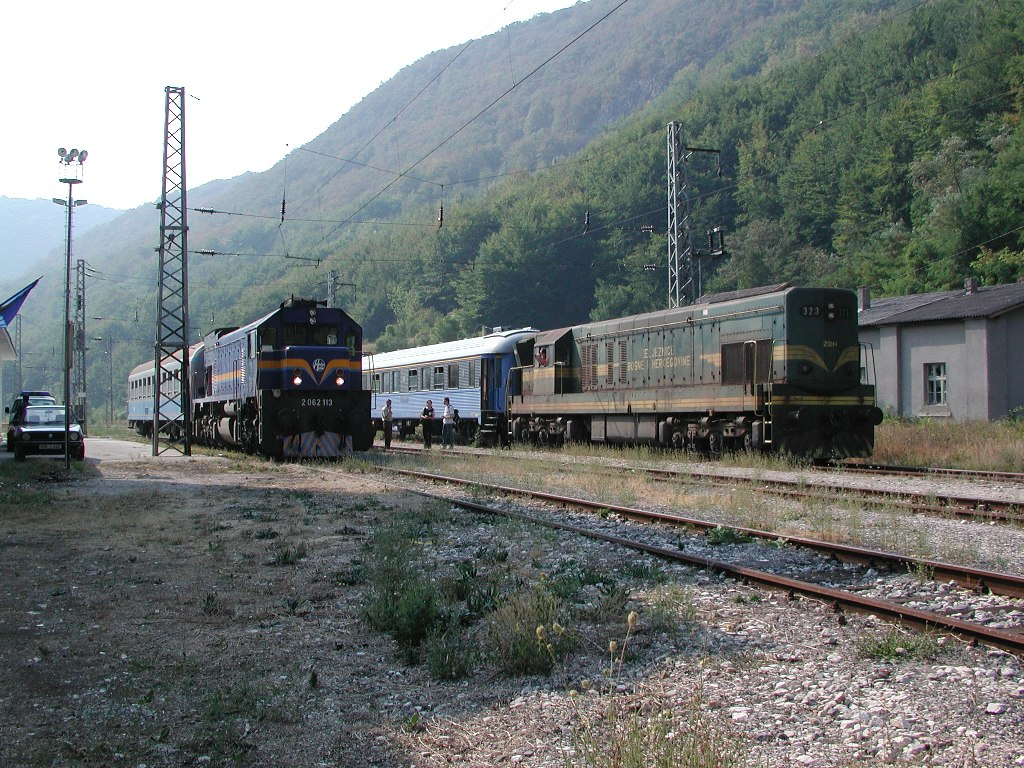

A special train ran from Zagreb to Knin in January 2001, supposedly announcing better days for the repaired line. It was the first and the last of its kind. Despite chartered passenger trains going the full length of the line occasionally in the 2000s, scheduled passenger service never returned, and freight trains only used the Una railroad very seldomly. Traffic on the Croatian portion of the line fully shut down in 2010 and even though HŽ Infrastruktura (the Croatian rail infrastructure company) is still in charge of the Croatian portion of the line, they consider it inactive and don’t perform any maintenance.
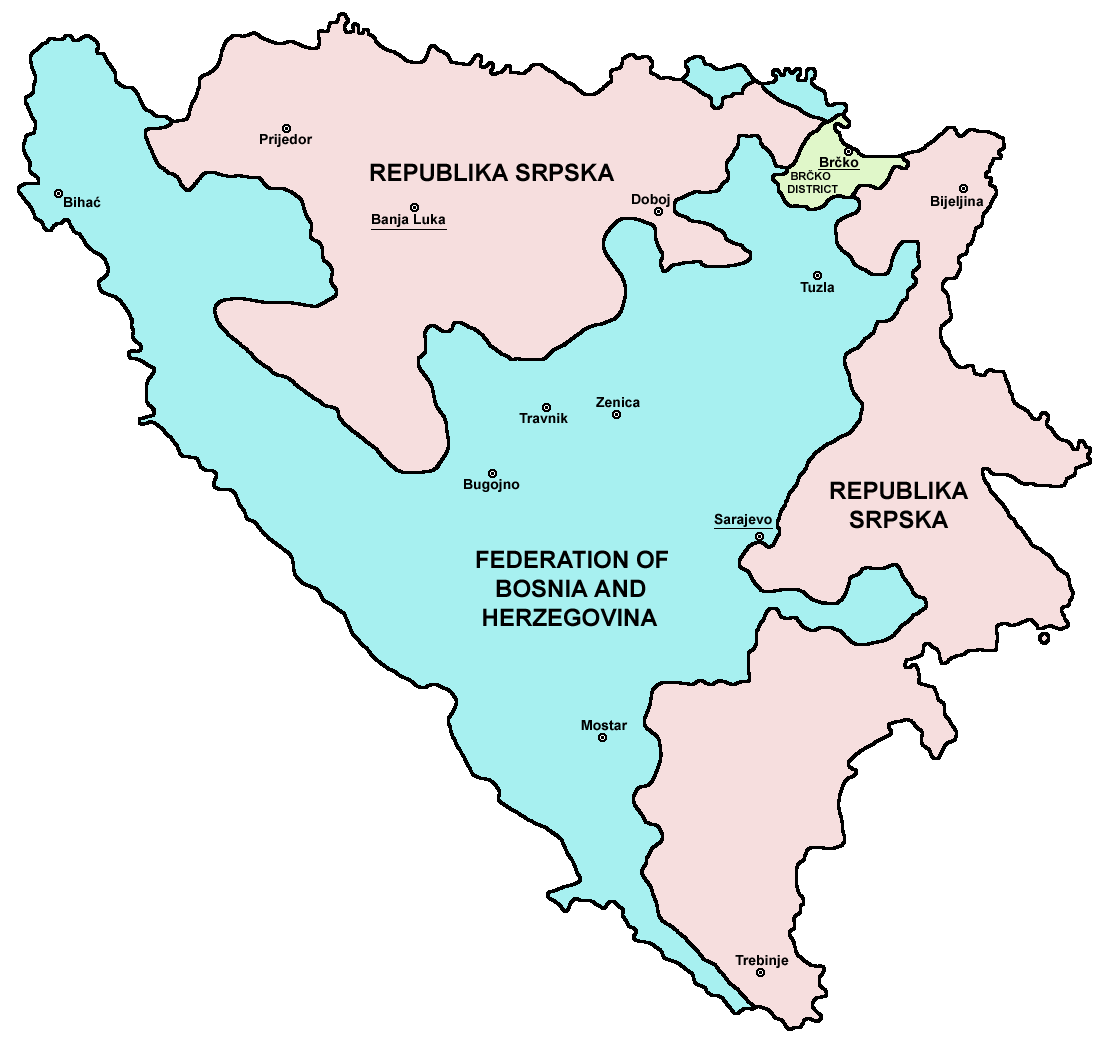
At this point our historical analysis needs to consider some facts about the complexity of actual rail operations on this line in the post-Bosnian war conditions. The 178km of the Una railroad aren’t just split between Bosnia and Herzegovina and Croatia. Railroads in BiH are split between the two entities defined in the 1995 Dayton Peace Agreement (Federacija BiH and Republika Srpska). Railroad business in BiH is not split into infrastructure and operations, like it is in the EU, so infrastructure is also run by separate companies in each entity. To operate trains on just the 120km of the Una line in BiH (and to connect to any other railroad), you need collaboration between Željeznice Federacije BiH (ŽFBH) and Željeznice Republike Srpske (ŽRS).
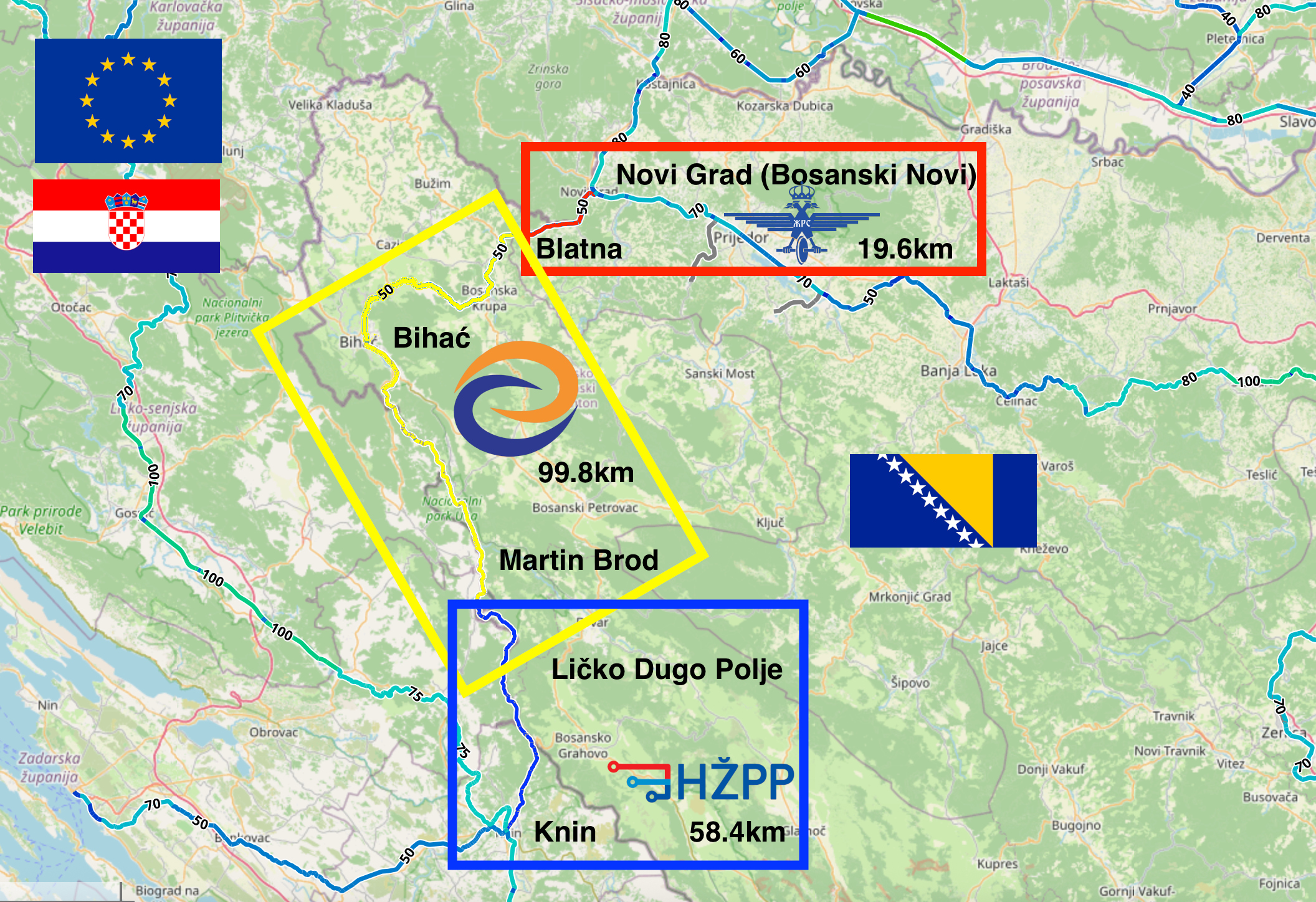
The rough mock up map above shows the outline of separate responsibilities on the line. From Novi Grad (Bosanski Novi) to Knin (in Croatia), the responsibilities are roughly:
Novi Grad (Bosanski Novi) – Blatna (ŽRS): 19.6km (in red)
Blatna – Martin Brod (ŽFBH): 99.8km (in yellow)
Martin Brod – Knin (HŽ Infrastruktura): 58.4km (in blue)
The southmost portion has been fully inactive since 2010, but there’s been sporadic traffic on the ŽRS and ŽFBH sections. Per my research, below is the status of different sections. Note that actual use is somewhat different from the hard split of areas of responsibility outlined above:
Novi Grad (Bosanski Novi) – Bihać: passenger service until 2021, operated in collaboration between ŽFBH and ŽRS. One tourist train ran in 2025. Tourist service between Bihać and Bosanska Krupa (extension to Bosanska Otoka announced) in 2026 operated by ŽFBH. Somewhat maintained and electrified.
Bihać – Martin Brod: chartered Rotary train ran for the last time in 2019. Electrification was never restored but station buildings are somewhat staffed and maintained.
Martin Brod – Knin: rare chartered passenger service and some freight until 2010 when HŽ fully suspended their portion of the railroad. Completely unmaintained and abandoned.
Novi Grad (Bosanski Novi) – Bihać
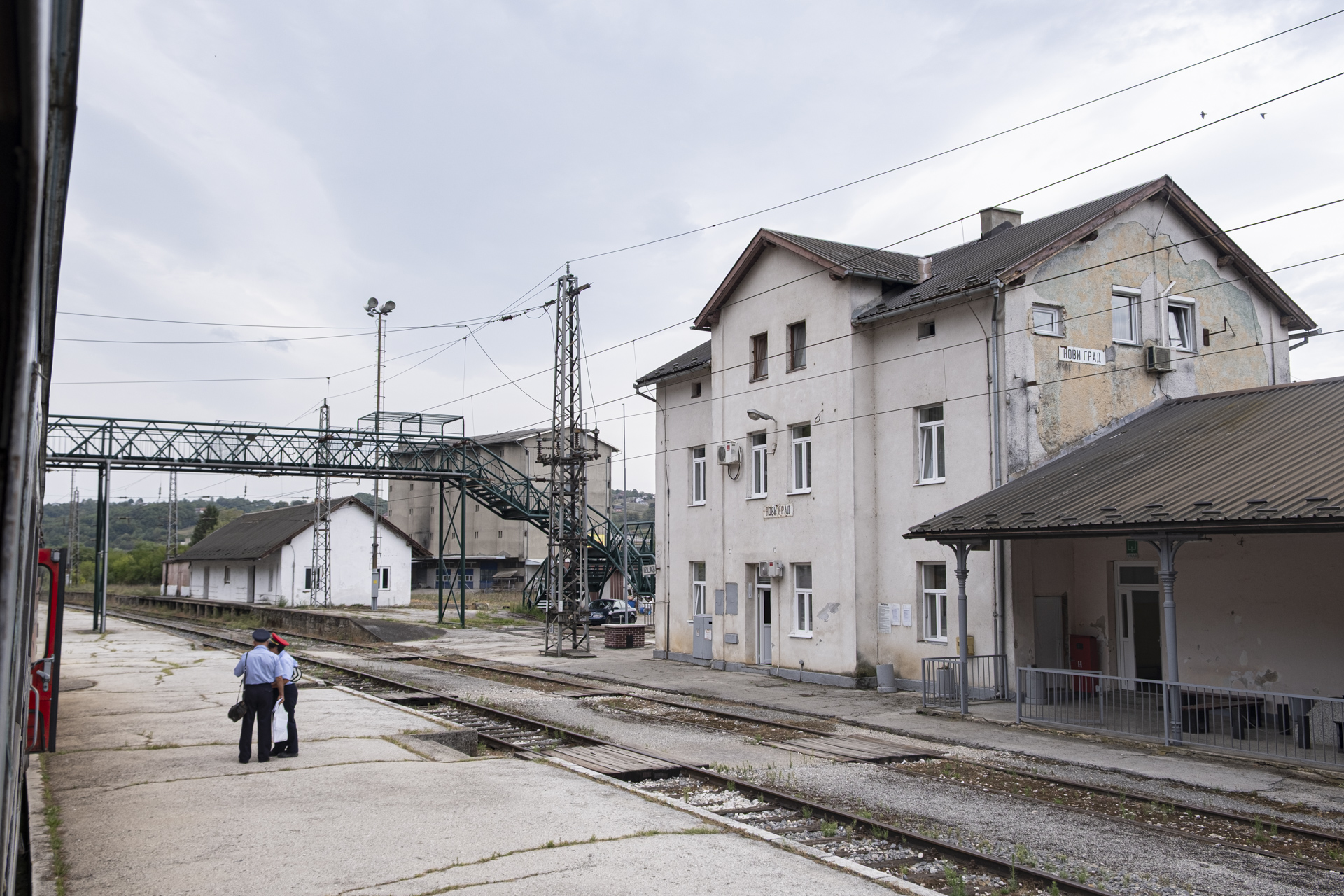
Reportedly, first passenger train collaboration on the ŽRS-ŽFBH section between Novi Grad (Bosanski Novi) and Bihać began in 2010 with diesel hauled trains, but service to Sarajevo wasn’t introduced until electrification was restored through to Bihać in 2018. Sarajevo – Banja Luka – Bihać service lasted for 3 years, until 2021. The service was slow – over 8 hours between Bihać and Sarajevo, but it ran with ŽFBH’s relatively modern Talgo VII trainsets. The most important thing is that it ran across both ŽRS and ŽFBH networks, and it was a scheduled, daily service.
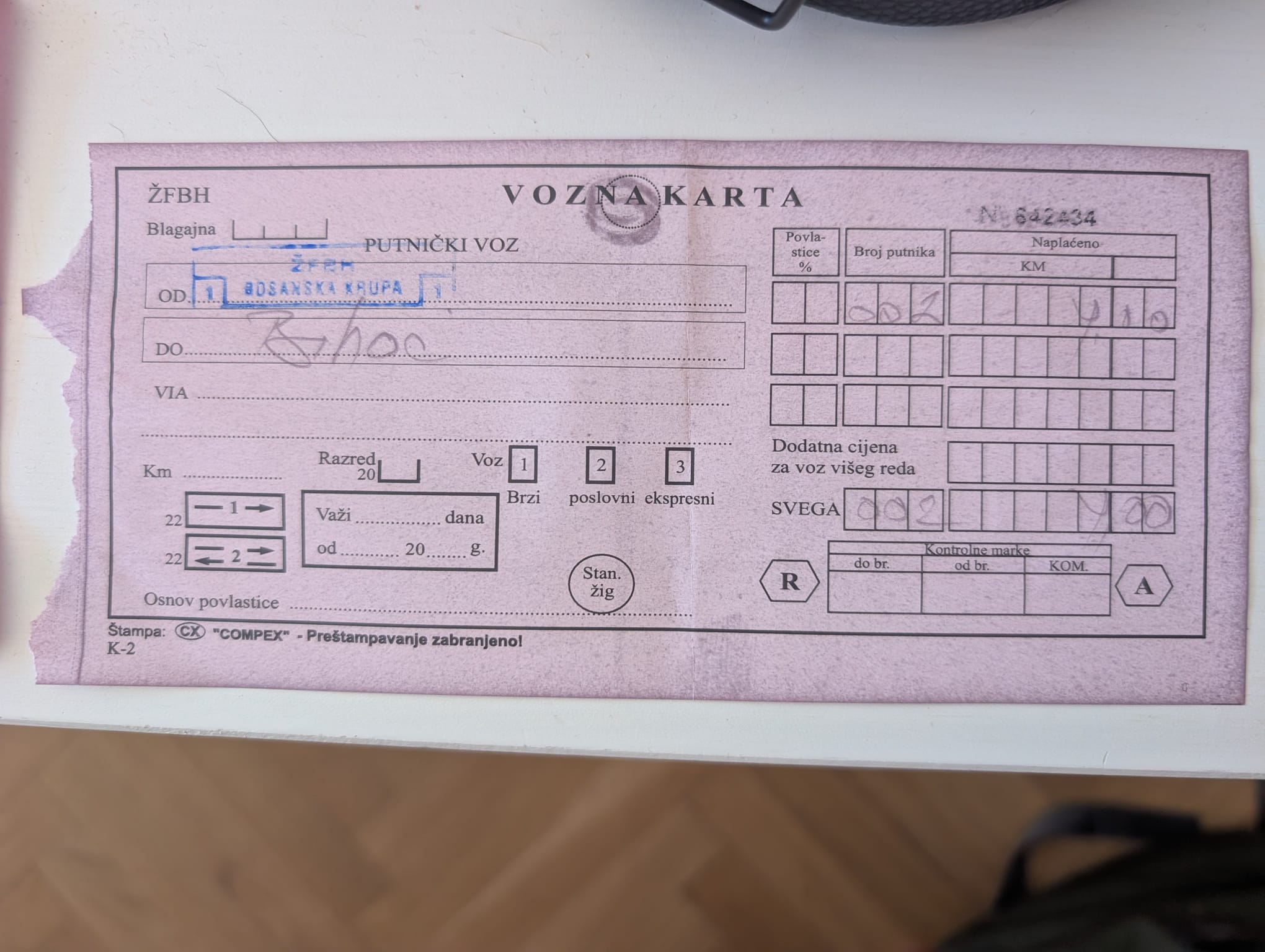
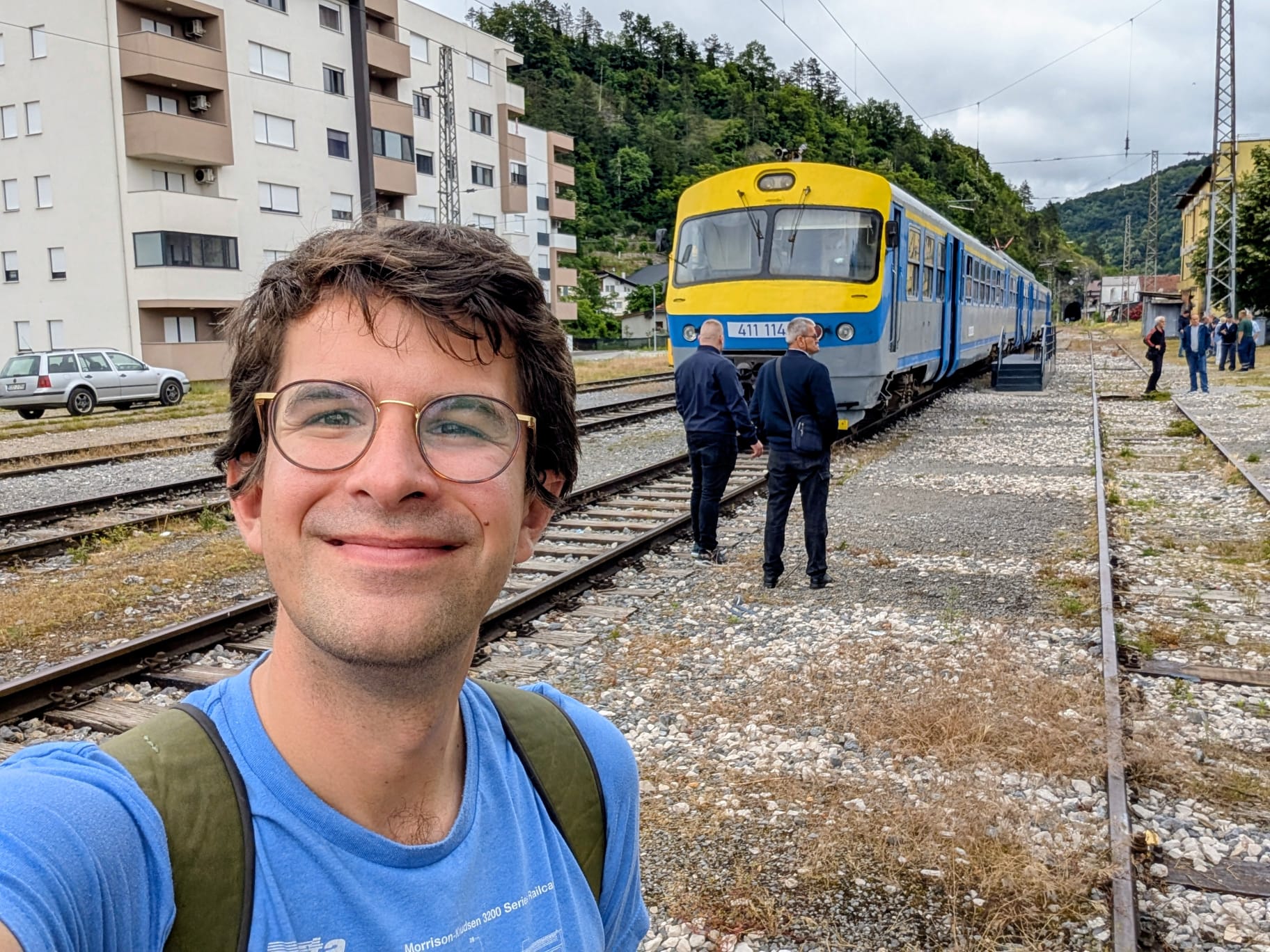
A few days ago I had the privilege of taking the first scheduled run of the 2026 summer service between Bihać and Bosanska Krupa, operated solely by ŽFBH. Even though the service is scheduled (two pairs of trains on Saturdays and Sundays, through the summer), it’s advertised as a “tourist train”. Covering only 32km between Bihać and Bosanska Krupa, it’s not really useful for actual transportation, but it’s a unique experience for visitors in this beautiful part of Bosnia. This section was chosen for a few reasons. Bihać is the largest town on the line and this portion is in relatively good state of repair (electrified, speeds up to 50km/h), even though signaling doesn’t work and none of the level crossings are protected. Most importantly, ŽFBH was able to start this service without having to coordinate with ŽRS, since they control the line (roughly) all the way up to Blatna.
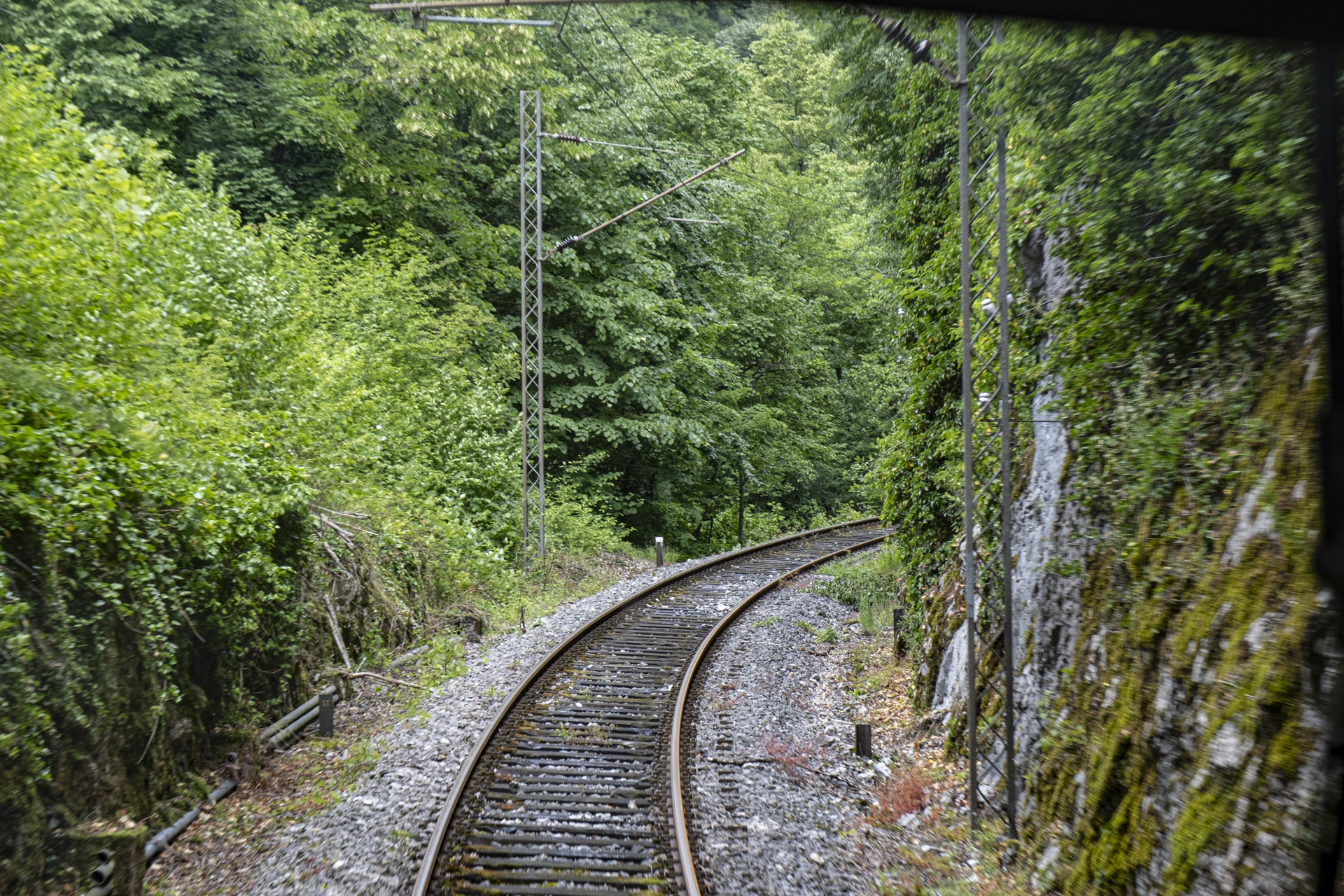
While extending the service up to the ŽRS managed Novi Grad (Bosanski Novi) would be ideal, it’s unlikely that this collaboration will materialize in the near future. ŽFBH has already announced an extension to Bosanska Otoka, 10km north of Bosanska Krupa. This gets them as far north as they control. At 2KM (1 €) one way ticket, this is a great deal. We traveled on a spruced up (repainted) ŽFBH Ganz-MÁVAG 411-100 series, one of the two remaining original ŽTO Sarajevo EMUs used on the prestigious Olimpik service in the 1980s. This particular train was likely freed up from the Sarajevo-Pazarić commuter line after the former HŽPP Ganz-MÁVAGs entered service with ŽFBH. The short ride gives you a taste of the beautiful Una river, and it’s a unique experience for both locals and visitors alike.
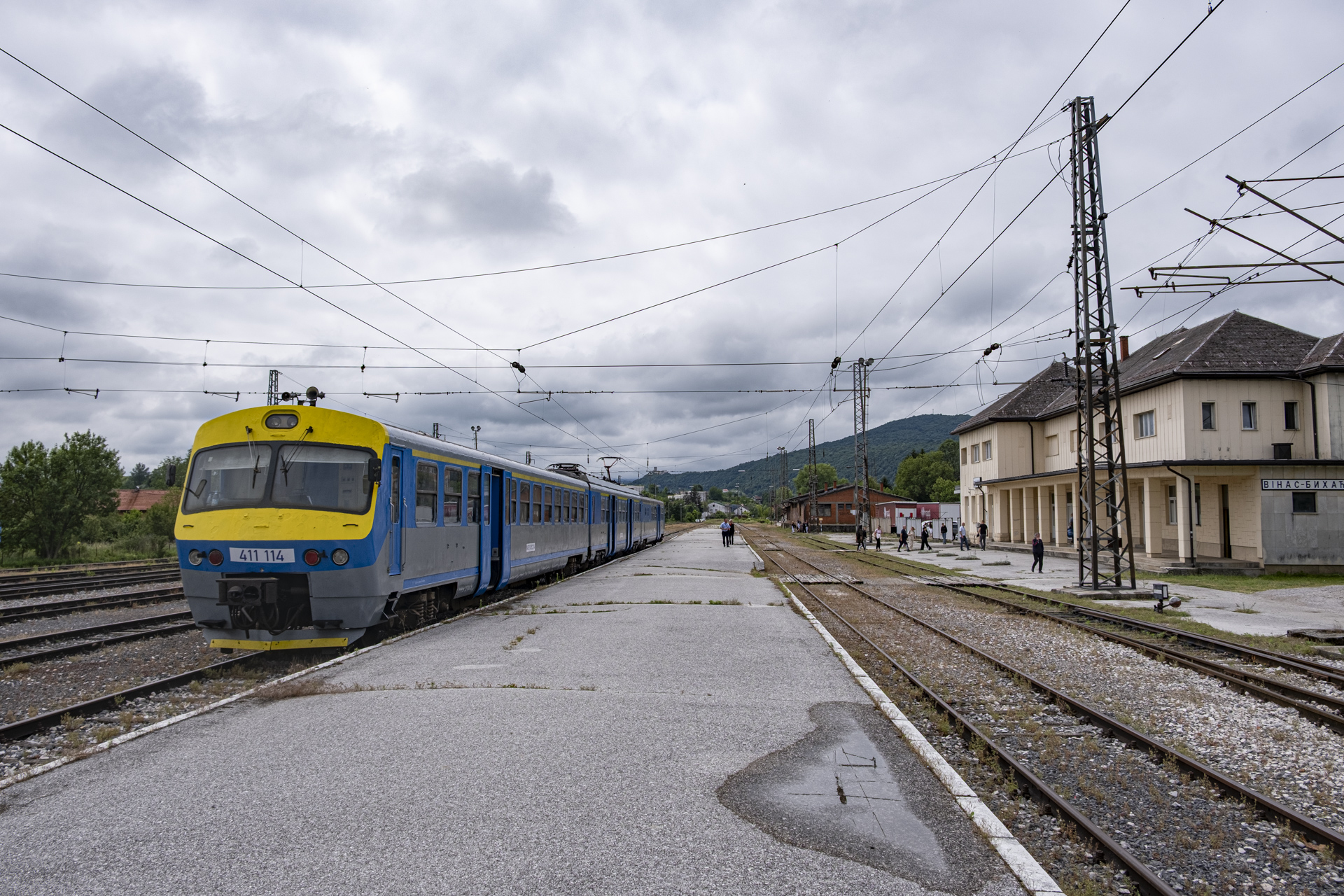
But what can we learn from this service about the actual revitalization potential for the rest of the line? Unfortunately, not much. It’s proof that the northernmost section is still in good enough state of repair to run trains. Electrifications works. Were it not for the ŽRS-ŽFBH collaboration and resource issues, we could easily start running trains from Bihać to Sarajevo tomorrow. But running trains on 50ish kilometers of ŽFBH controlled railroad is a long way from actually revitalizing the whole Una line.
Bihać – Martin Brod
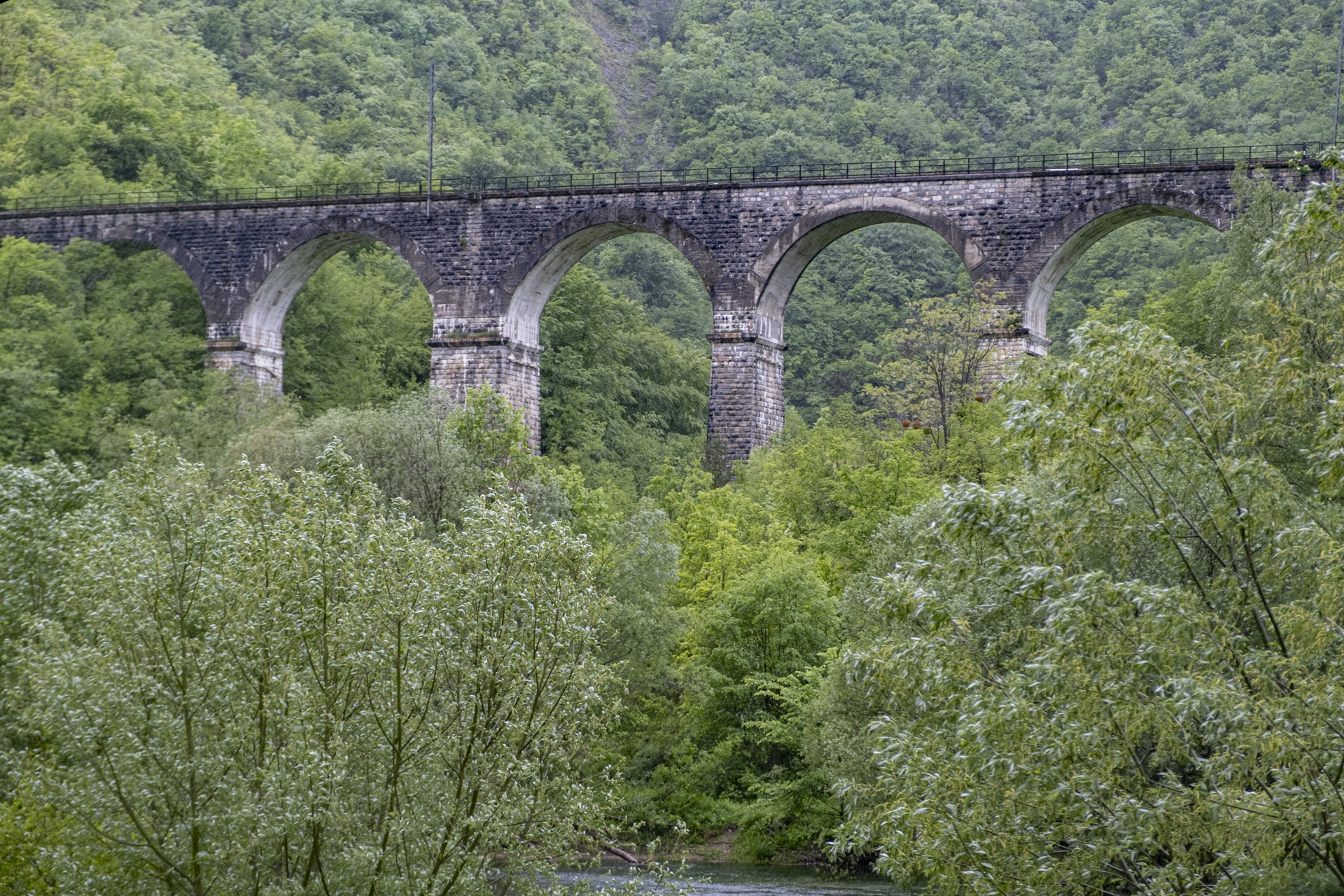
This is because of the sections south of Bihać. Even though the 49.8km section to Martin Brod is fully controlled by ŽFBH, there are major issues with restarting service here. For start, even though there is catenary above certain sections, electrification was never restored after the war, so you’d need to either restore it or run diesel trains. Stations, some of which are seldomly staffed even though no trains run here, are in very bad state of repair. Ditto for the rails and bridges. Reportedly, the last time a “passenger train” ran here was 2019, when a chartered Rotary train visited Martin Brod. It’s possible that some ad hoc freight passed here since then, but when I visited there in mid May, rails showed no sign of recent usage.
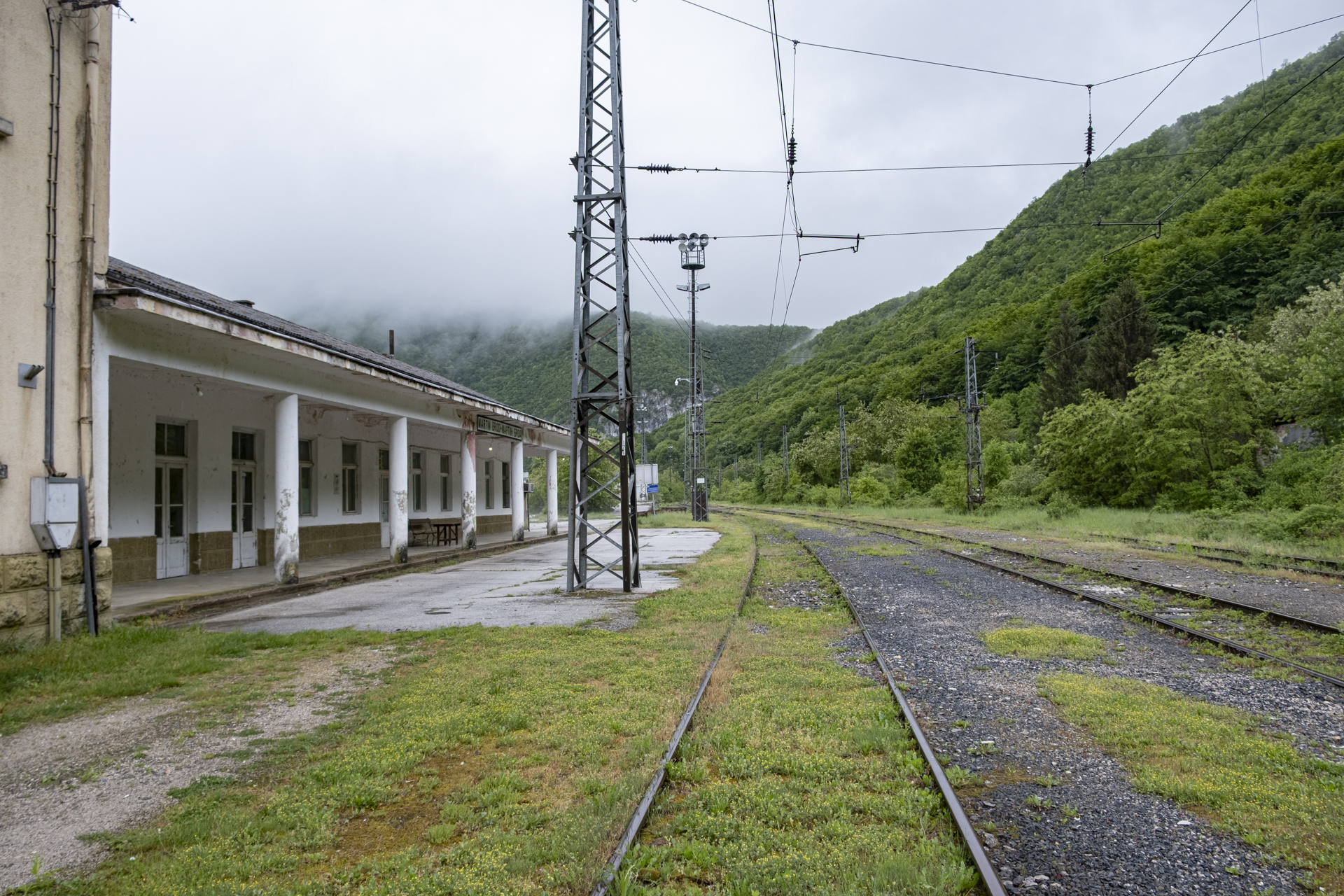
The Una railroad was crucial for connecting the towns and villages south of Bihać, like Kulen Vakuf and Martin Brod. Especially since the war, and the hardening of the Croatian/EU border, these places depend on inadequate, low quality roads along the Una, some of which are still unpaved. In Martin Brod, the west side of the village is only accessible to cars over an old Bailey bridge, installed by the US Army on top of an old destroyed road bridge.
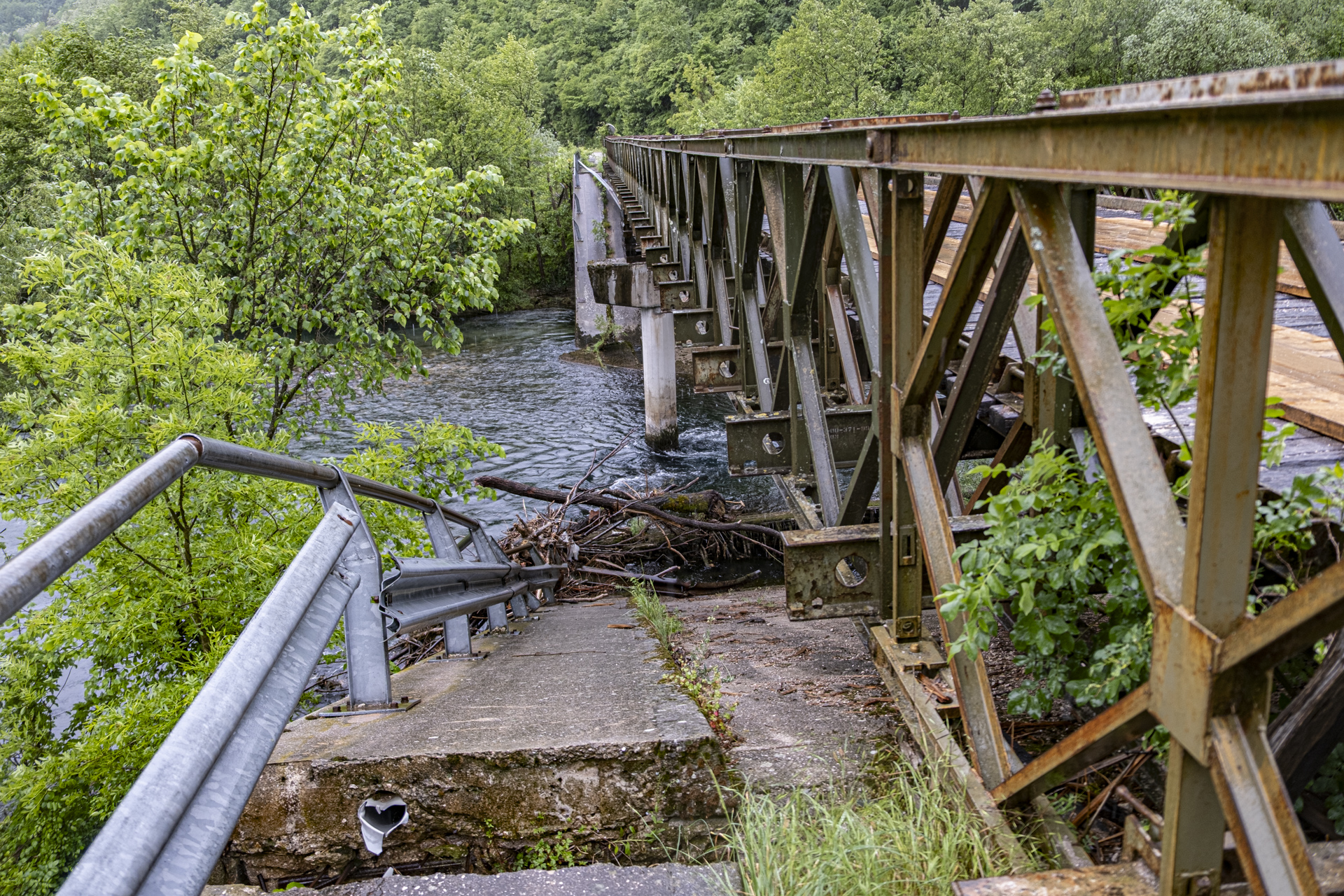
The “temporary” bridge has been there for over 30 years. And yet, even though scheduled rail connectivity could do a lot to reconnect and revitalize these places, with low population density it is highly unlikely that ŽFBH will run passenger trains there even if they figure out how to work with ŽRS in Bihać. If that wasn’t difficult enough, the line also crosses from Bosnia and Herzegovina into Croatia for 15km, between Loskun and Bušević. While cross border operations of this kind were previously possible, it’s hard to imagine anything more than special chartered trains making this trip in the current, aggressive border control environment in Croatia and the EU.
Martin Brod – Knin
It’s precisely this last issue — the hard Schengen border and the general disinterest of Croatian authorities and HŽ Infrastruktura, that will likely be the nail in the coffin of the Una railroad for any passenger service south of Bihać. Even though the line crosses back and forth between BiH and Croatia 6 more times south of Martin Brod, the remaining 58.4km to Knin are under management of HŽ Infrastruktura. Before they shut down their portion of the railroad on May 17th 2010, border control was performed at Martin Brod (BiH) and Ličko Dugo Polje (Croatia). Officially, Ličko Dugo Polje is still considered a permanent border crossing. However, the station, just like all the other infrastructure on the Croatian side, hasn’t been staffed or maintained for over 15 years.
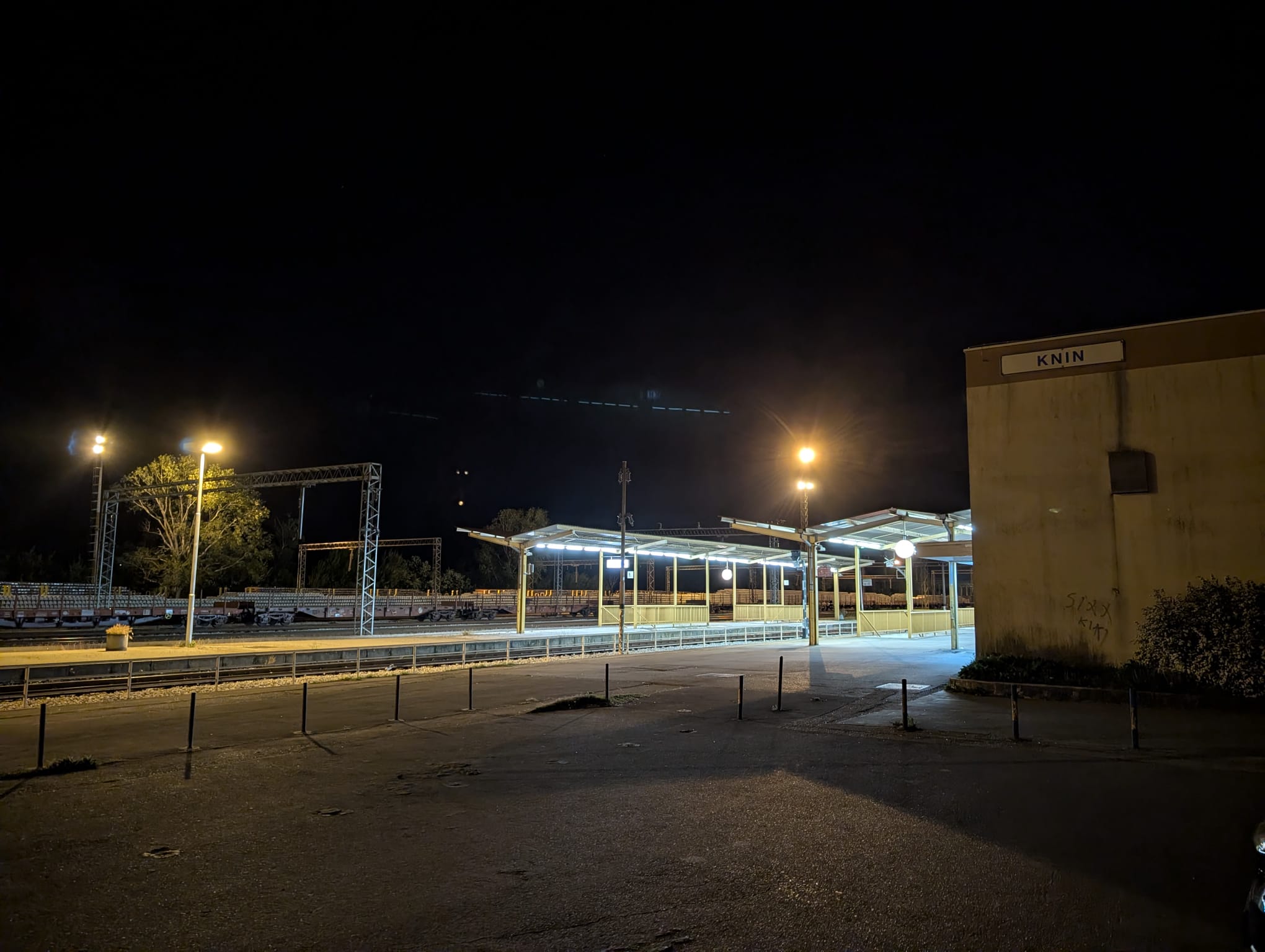
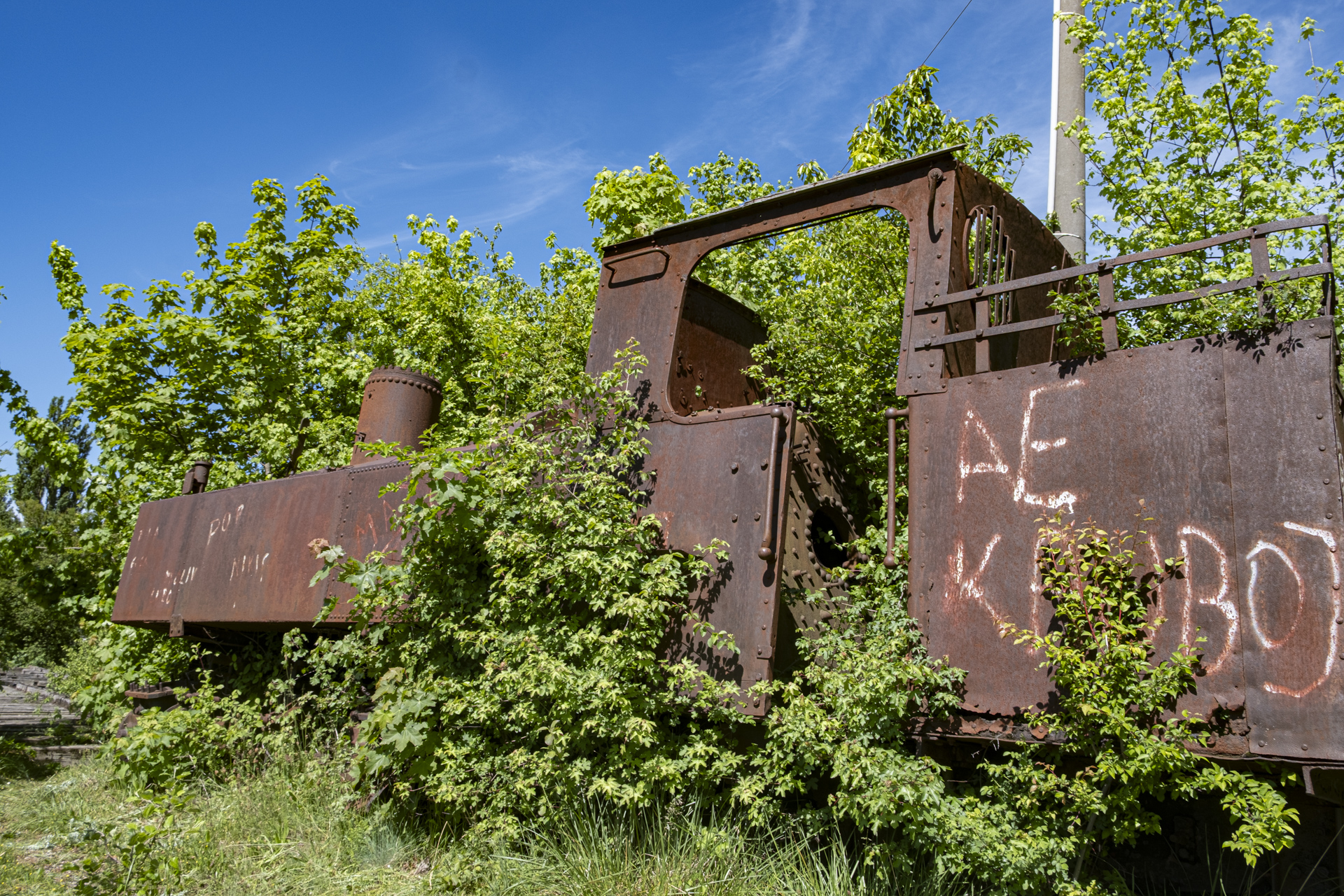
I still need to travel the Croatian portion of the Una railroad to assess it in person. I was in Knin in late April and saw the remains of catenary and the the dead Una line tracks. Croatia seems intent on maintaining the right of way, but only on paper – the infrastructure itself has been abandoned and left to rot. From the information available, restoration of the 58km in Croatia would cost 200 million euros. While this is not an impossible amount (the renovation and double tracking of 83km of Dugo Selo – Novska will cost almost a billion euros), I don’t see this happening before Bosnia and Herzegovina is in the EU, or without a radical change in both inter-BiH and BiH-Croatia relations. We can see the lack of Croatian interest in how they’re treating the “still-on-paper” border station at Ličko Dugo Polje. Croatian law recognizes 7 border stations – 5 with BiH and 2 with Serbia. 6 of them are in various stages of adaptation to make them Schengen compliant (they are in use with “temporary measures” in the meantime). The one station with no work planned is, of course, Ličko Dugo Polje on the Una line.
The future?
Croatian and BiH transport ministers met in Zagreb a few months ago and put out a statement that they are working on revitalization plans for the whole Una railroad. While I welcome any sign of movement on this issue, no concrete plans were offered nor did they address any of the core issues: ŽRS/ŽFBH collaboration, border issues, cost, goals for future operations etc. At this point, unless we see something that addresses at least one of these issues, I will chalk this up to usual fluff without intent to actually do anything. Before I believe any BiH-Croatia Una line plans, I would like to see the Sarajevo – Zagreb service restored. This connection has been out of service for almost a decade, while infrastructure is fully functional. If ŽFBH, ŽRS and HŽPP can’t figure out how to run Sarajevo – Zagreb trains, there is little hope for the Una line. There are talks to actually bring Sarajevo – Zagreb back in 2027, but I’ll believe it when I see it.
The hard prerequisites for the Una line revitalization, along its full length, are:
- shipping demand: even though the Una line was built to facilitate shipping from Bosnia to the Dalmatian ports, Zadar, Šibenik and Split have very little commercial shipping anymore. Most freight in Croatia ships through the ports of Rijeka and Ploče, both of which have active rail connections. Only very strong financial interest from (at least one) of these ports + large interest from freight customers in BiH and Croatia could actually get things moving for the Una line
- ŽRS-ŽFBH collaboration: much has been said about this issue, but until these two companies (and by extension the two BiH entities) resolve their issues or merge, it would be incredibly risky to start any large cross-border infrastructure projects
- border issues: same applies to the border issue itself. Even if the other two issues were resolved, the continued hardening of the border makes this additionally difficult and risky. In the current geopolitical climate I don’t see anything happening until BiH is at least in the EU, if not in Schengen
I have spent hours researching meticulous details about this line’s past and present. I’ve visited decrepit stations and tired tracks. But details themselves become ultimately irrelevant – like so often in the Balkans, these seemingly super complicated things are awfully simple. The Una line is dead because 35 years ago a country violently disintegrated in war. This war destroyed countless lives and drew up new lines on maps. Instead of railroads that connected people, these new lines, whether international borders like the one with Croatia and the EU, or internal ones, like the one between Federacija BiH and Republika Srpska, are meant to keep people apart. The dead Una line is perhaps one of the most striking manifestations of the stubborn corrosiveness of war, a literal monument to evil and stupidity. But it’s the reality that we live in now, 30 years later, in the rubble of the Yugoslav Wars.
And yet, between the hard reality of infrastructure and even harder reality of post-conflict political divisions and borders, there is also a parallel, somewhat liminal reality — the one of emotion and experience of those of us lucky enough to have taken a ride on the Una line, even just for a little bit. Traveling from Bihać to Bosanska Krupa on the old Olimpik, a tired yet proud train, just like the Una railroad itself, I couldn’t ignore the sheer joy and happiness of everyone on board. A few of us traveled from a couple of hours away, but most passengers were locals, happy and proud to ride a train on the line that had built up their towns and villages. Few things compare to the excitement of little kids getting to ride on a train for the first time. The train staff was confident and proud – you could tell that if they could, they would drive this train all the way to Sarajevo, or, why not, Stuttgart!
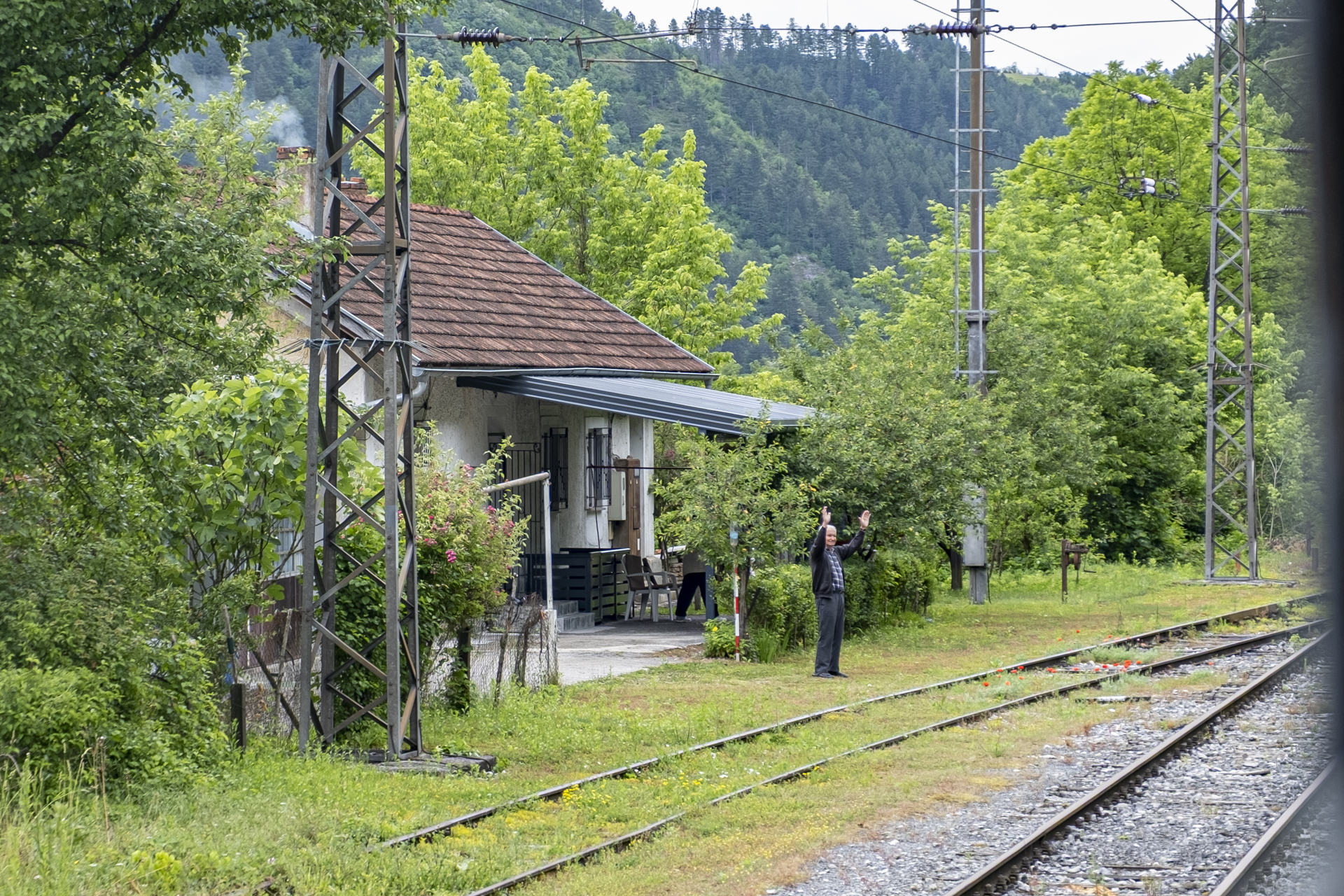
But one moment will stick with me. As the train passed Cazin-Srbljani, its only intermediate stop on this trip, an older gentleman stood in front of his house, right by the railroad, and waved towards the train. As we passed him, his wife joined in. I waved back, suddenly overcome by emotion seeing these folks who must have witnessed the full life and death of this railroad from their home. Emotions alone won’t be enough to change the material and political reality that has kept this line dead. But I hope that experiencing what this railroad can be might help bring folks together and perhaps be the start of a new effort for its true revitalization. First within Bosnia and Herzegovina, and perhaps one day in Croatia too.
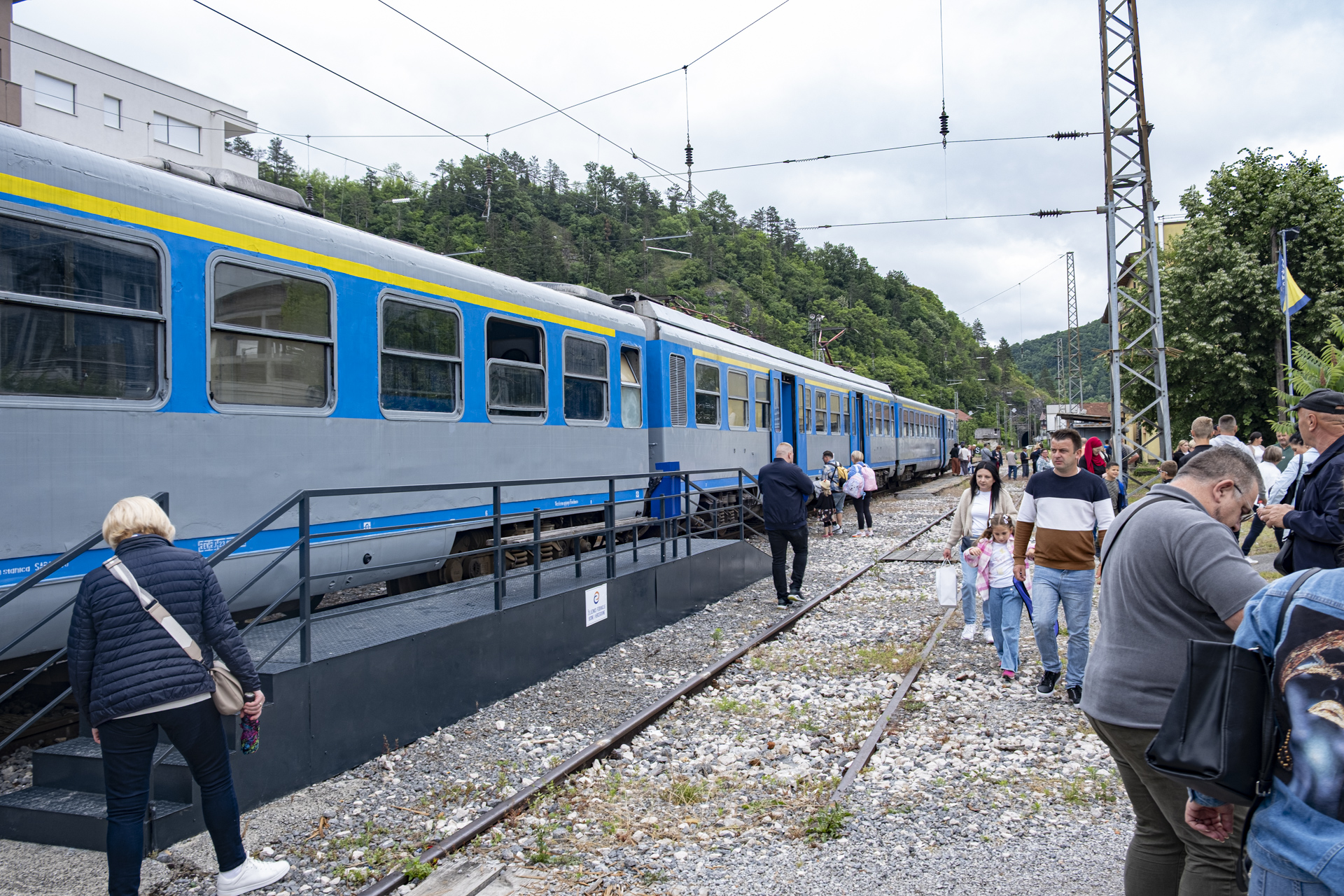
Timetable
If you too would like to take a ride on the Una railroad, as of June 11th the current timetable is:
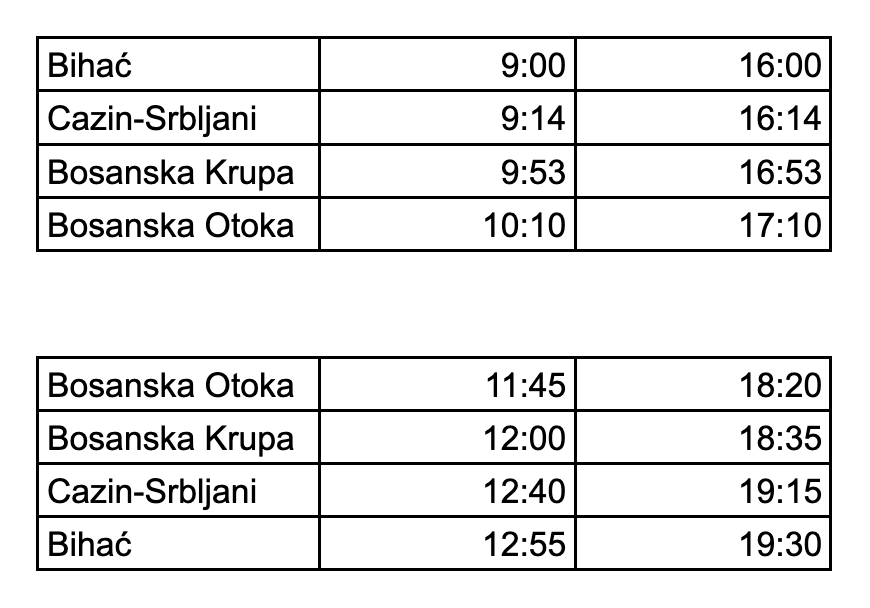
Since the timetable is prone to changing, check zfbh.ba for up to date information. Tickets can be purchased at stations in Bihać and Bosanska Krupa (perhaps Bosanska Otoka too), or on the train. Tickets are 2KM one way – make sure to prepare cash!